
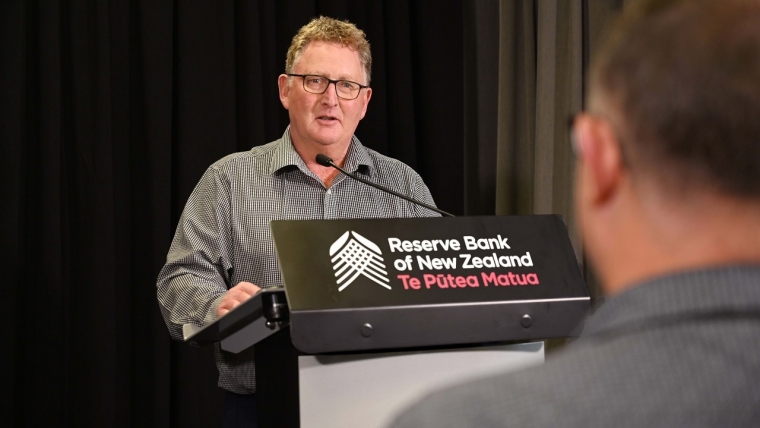
The world is seeing a "capital drain" into the United States at the moment, Reserve Bank Governor Adrian Orr says.
He told an NZ Council of Trade Unions function in Wellington on Monday that the fall in value of the Kiwi dollar - it's currently worth around US56.3 cents - was due to the fact that US interest rates were being pushed up strongly to fight inflation.
This was prompting a capital drain from the rest of the world into the US to where the highest yield is and was also leading to broader uncertainty that was prompting people to want to have capital back in the US - a "safe place" - as opposed to effectively the rest of the world.
"When you see the Kiwi dollar at the moment, it is vis a vis the US dollar in terms of a declining New Zealand dollar. Almost every currency in the world is declining against the US dollar as they [the US] look to disinflate along with the rest of us," Orr said.
"It's just that they matter more on the way through."
Orr noted the very high rates of inflation at the moment, particularly in Europe.
In a "relative" sense New Zealand is in an excellent position, he said.
The RBNZ has been rapidly hiking interest rates, having raised the Official Cash Rate from just 0.25% as of October last year to 3.0% now. And a further 50-point rise is universally expected by the marketplace when the next review takes place on October 5.
"We've come through this extremely well. It doesn't mean that 7.3% inflation [as of the June quarter] is acceptable - no it is not. But in that relative global shock, just giving it some perspective.
"Obviously at 7.3% this central bank has got work to do," in terms of getting inflation back into its targeted 1% to 3% range, Orr said. So, the central bank has been "renormalising" the level of interest rates from the Covid lows.
"We were noisy about it, because the more people have low inflation expectations the easier it is to achieve low inflation expectations.
"We believe we still have some work to do - but the good news is, because we've done so much already, the tightening cycle is very mature. It is well advanced.
"So, we've got a little more to do before we can drop to our normal happy place, which is to watch, worry and wait and look for signs of inflation up or down - at the moment we feel we are still too close to some sense of neutral but well on course to achieve that."
The RBNZ has defined the level of 'neutral' interest rates - where they are neither stimulatory, nor restrictive - as about 2%, but has indicated that the real neutral rates may be getting higher. And it is doing some work on that at the moment. Economists have suggested the real level of neutral may now be about 3%.
Orr said the real challenge ahead for NZ is productivity, when it comes to the labour market.
"This is the time to be thinking about, can you do better things? Or can you do the same thing better?"
"I believe it is a great opportunity for doing the same thing better."
He said the country needs to look at achieving better output per person.
"That is the huge necessary opportunity that sits in front of us - how we can think about that."
We welcome your comments below. If you are not already registered, please register to comment
Remember we welcome robust, respectful and insightful debate. We don't welcome abusive or defamatory comments and will de-register those repeatedly making such comments. Our current comment policy is here.