
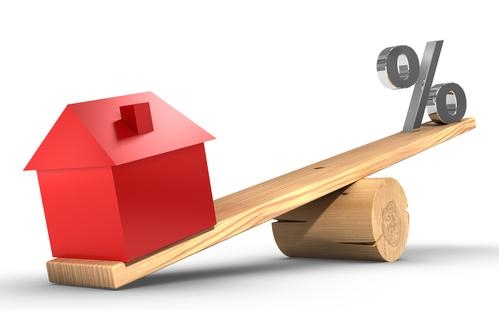
A slowdown in the housing market is now becoming "entrenched", with rising mortgage rates set to be the biggest drag on the residential sector this year, according to Westpac chief economist Dominick Stephens.
However, Stephens said in the latest Westpac Home Truths economic note that he believed the impact of the Reserve Bank's 'speed limits' on high loan-to-value lending had probably already gone past its peak.
"We have had another round of data confirming that New Zealand’s housing market is firmly in slowdown mode," he said.
Real Estate Institute data for January showed, based on Westpac seasonally-adjusted figures, that house sales fell for the fourth month in a row, while the time taken to sell rose, Stephens said.
"This month we also saw the beginnings of weaker price data. The REINZ House Price Index fell in seasonally adjusted terms for the first time since April 2012. And Quotable Value’s monthly price index registered a sharp slowdown in the pace of price appreciation."
Stephens said he didn't think the housing market slowdown was "necessarily" going to become any more severe over the next couple of months. "If anything, we might see a small tick up in market turnover".
"...The impact of the RBNZ’s mortgage restrictions has probably passed its peak. Banks have reduced lending to people with small down payments by more than enough to meet the RBNZ’s requirements, and can now afford to increase lending a bit."
However, over the course of the year the Westpac economists expected rising mortgage rates to "become the biggest drag on the market".
"We expect floating mortgage rates will rise by about one percentage point this year [which would take them to around 6.75%], while fixed mortgage rates rise by a lesser increment. This will have the usual impacts – property investment will look less attractive, as will getting a mortgage instead of continuing to rent."
The Westpac economists have maintained their forecast of 6.5% house price inflation this year, down from 10% last year.
In talking about the recent run up of housing prices, Stephens reiterated and expanded on some of Westpac economists' earlier views that the real cause was lower interest rates rather than a supply problem.
"Housing markets can be affected by a variety of factors at different times – housing supply, population growth, interest rates, and taxation to name a few. Among the possible drivers, opinion in New Zealand seems to have zeroed in on housing shortages as the explanation for the house price run-up of 2012-2013," Stephens said.
'Didn't fit the evidence'
But this "physical shortages explanation" did not fit the evidence well, and did not explain recent year-to-year changes in the rate of house price inflation.
"Something else must be going on – and if we want to have a shot at correctly anticipating the next change in the housing market, we have to understand what it is.
"The supply-shortage story failed to predict the sudden acceleration in house price inflation of 2012. There was no corresponding change in the physical supply of houses versus population at that time (Auckland had been building too few new houses for years; the Canterbury earthquake occurred a year earlier; net migration ramped up a year later).
"This latest downturn is another housing market development that was not predicted by physical supply shortages. Net migration has accelerated recently, and although there has been some increase in construction activity, it has not been of sufficient magnitude to explain this housing market downturn.".
Predicting turns in the market
In contrast, Stephens said the economist had been able to predict major turns in the housing market over the past few years by focussing on financial factors such as mortgage rates.
"Back in mid-2012 we observed a very sharp decline in fixed mortgage rates, and correctly predicted that double-digit house price inflation would promptly ensue. That prediction was based on our Investment Value of Housing model [see chart below], which calculates the value of a median house to a property investor
"The investment value of a given property is sensitive to interest rates – the more cheaply an investor can borrow, the higher the price he/she can pay for a house while still realising a profit at a given level of rents. When interest rates fell sharply in 2012, our Investment Value model rose sharply. This was a valuable signal of house price inflation to come."
Stephens said the latest slowdown in the housing market had "played out similarly".
"There was a sharp increase in fixed mortgage rates beginning in August 2013. Our Investment Value model fell sharply, suggesting a market slowdown was around the corner. Around the same time the RBNZ introduced new mortgage lending rules that restricted the availability of credit to some aspiring buyers, and resulted in very large increases in the mortgage rates available to others – another financial factor that pointed in the direction of an imminent market slowdown."


We welcome your comments below. If you are not already registered, please register to comment
Remember we welcome robust, respectful and insightful debate. We don't welcome abusive or defamatory comments and will de-register those repeatedly making such comments. Our current comment policy is here.