


First home buyers are seeing the benefits of declining house prices and the recent falls in mortgage interest rates, with a substantial improvement in home loan affordability over the last six months.
Interest.co.nz estimates the mortgage payments on a home purchased at the Real Estate Institute of NZ's national lower quartile selling price would have declined by around $81 a week between March and August this year, if the home had been purchased with a 20% deposit. If it was bought with a 10% deposit the mortgage payments would have fallen by about $97 a week.
That's because the national lower quartile price declined from $600,000 in March to $577,500 in August, while the average two year fixed mortgage rate declined from 6.77% to 6.00% over the same period.
That fortuitous combination not only reduced the amount that would need to be paid for a home at the lower quartile price, it also reduced the amount needed for a deposit, the size of the mortgage needed to make the purchase and the amount of the mortgage payments.
Interest.co.nz also compares the mortgage payments outlined above, against the median wages of couples aged 25-29, to get a standard measure of affordability.
A mortgage is considered unaffordable if the payments eat up more than 40% of a couple's after-tax pay.
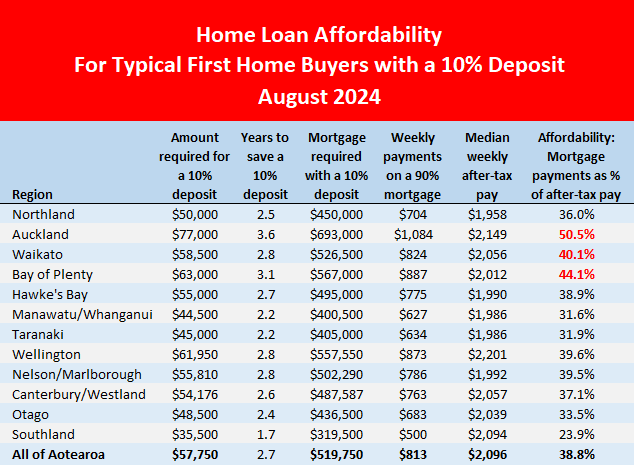
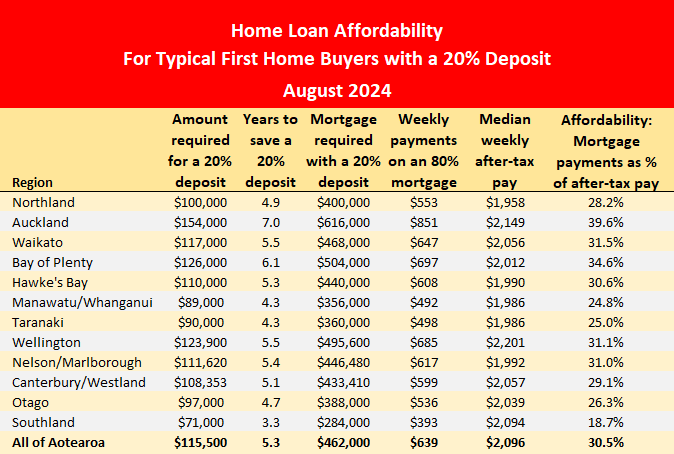
The latest declines in prices and mortgage rates means all regions of the country are now considered affordable for typical first home buyers, provided they can scrape together a 20% deposit.
That is even true for the Auckland region, which slipped under the 40% affordability threshold for the first time in almost three years in August.
The last time Auckland housing met the affordability criteria was September 2021, when the average two year fixed mortgage rate was just 3.02%.
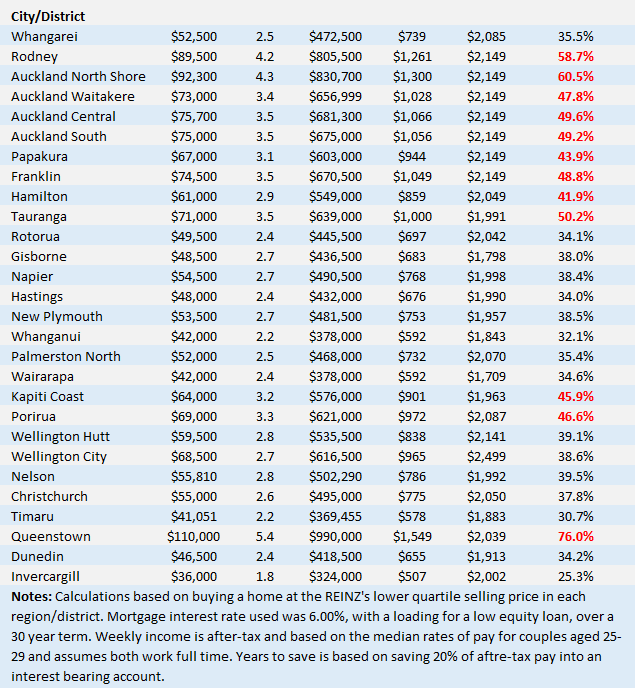
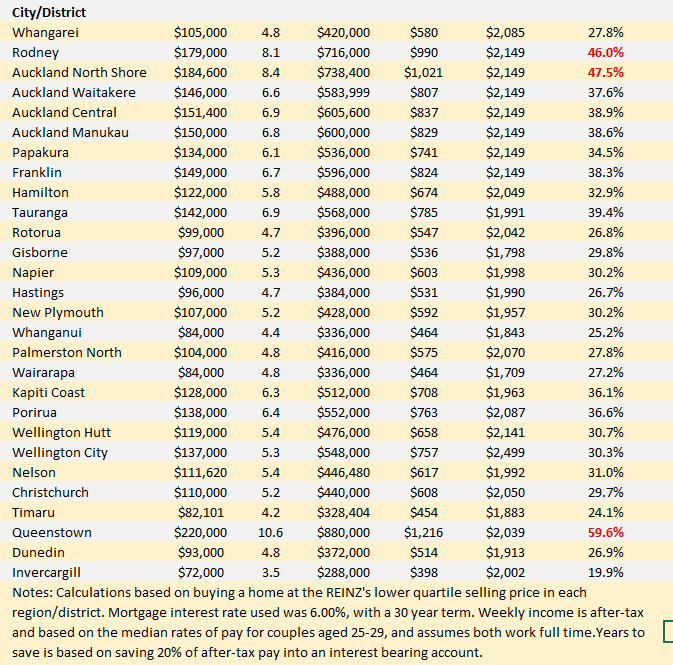
In fact the latest downward movements in prices and interest rates mean the only districts now considered unaffordable for typical first home buyers are Queenstown, along with Rodney and the North Shore in Auckland.
However, getting a 20% deposit together will not be easy for most first home buyers.
Someone buying a home at the national lower quartile price of $577,500 would need $115,500 for a 20% deposit, while around the regions a 20% deposit would range from $71,000 in Southland to $154,000 in Auckland.
Getting a deposit together is likely to be the biggest hurdle facing potential first home buyers on average incomes, particularly in the main centres.
Those struggling to find a 20% deposit could consider a low equity mortgage with a smaller deposit, however banks charge substantially more for low equity mortgages because of the higher risks involved, and that has the effect of significantly increasing the mortgage payments, which in turn reduces their affordability level.
Although there is no easy path to home ownership, the trends over the last six months would certainly have provided a slightly smoother path for many first home buyers.
The tables below give the main affordability measures for typical first home buyers in all of the country's regions and main urban districts.
- The comment stream on this article is now closed.
*This article was first published in our email for paying subscribers early on Friday morning. See here for more details and how to subscribe.
We welcome your comments below. If you are not already registered, please register to comment
Remember we welcome robust, respectful and insightful debate. We don't welcome abusive or defamatory comments and will de-register those repeatedly making such comments. Our current comment policy is here.