
More than twenty New Zealand rural industry leaders are about to huddle for a major high-stakes review of where our rural industries are heading.
A week-long 'boot camp' will be held at the acclaimed Stanford University campus in Silicon Valley, California.
The chief executives from New Zealand’s leading and emerging primary sector organisations representing dairy, beef, sheep, seafood, viticulture and horticulture are meeting "to collaborate and align resources" with the goal of significantly growing New Zealand’s primary industries.
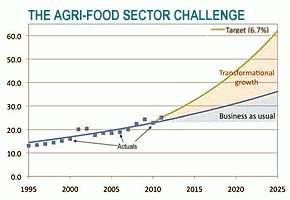
A national strategy has been called for, and the Government’s Economic Growth Agenda wants to see a trebling of the real value of food exports to about $60 billion (in real terms in 2011 dollars), or to about 40% of GDP by 2025. This would require a real compound annual growth rate of around 7% over the next 13 years, a daunting task, particularly in the current economic environment.
A recent contribution to this goal has been the release by Massey University's Riddet Institute of their report, A Call to Arms, setting out a comprehensive roadmap on how this goal can be achieved.
This report features four key strategies and four related 'enablers'.
The Stanford boot camp is expected to be a key first step in building a shared vision and the required commitments from the industry heavyweights who can make this happen. It is being held from August 12 to 17, 2012.
It has funding support from Agmardt (a rural industry support trust), the Ministry of Science and Innovation, the Ministry for Primary Industries, and New Zealand Trade and Enterprise.
The participants include ...
John Brackenridge, NZ Merino Company
George Gould, PGGWrightson
Keith Cooper, Silver Fern Farms
Mark Clarkson, ANZCO Foods
Chris Kelly, Landcorp
David Carter, Minister of Primary Industries
Graham Stuart, Sealord
Andy Borland, Scales Corporation
Jason Ross, Firstlight Foods
Brett Hewlett, Comvita
Wayne McNee, MAF
Peter Chrisp, NZTE
Todd Muller, Fonterra
Zespri is expected to have a senior manager present as well.
A 2011 review of what the future New Zealand agri-food industry might look like by 2025 concluded that some key weaknesses need to be addressed. These were:
- Distance from markets - both physical and psychological
- Lack of understanding of and connection to consumers and their changing needs in markets, coupled with a lack of 'consumer intimacy' – particularly in emerging markets
- Fragmentation within and between sectors and Government, and along the value chain. Government agencies are fragmented too
- Low levels of investment in R&D by industry
- Failure to embrace new technologies such as GMO food crops and irradiation of food
- Need for more capability
- Lack of capital
- Low levels of overseas direct investment
- Dominance of a small number of large firms and an absence of mid-sized firms
- Few New Zealand businesses involved in international business
The Stanford review will test the 'can do' commitment of the rural industry. As the Riddet Report notes:
A lot is at stake. Growth of almost $40 billion is targeted and only approximately half of that growth will be achieved via business as usual. Action is needed now to meet the growth targets by 2025.
Industry and Government must take note of the urgency and seriousness of the situation.
The largest threat is that not enough will be done to change the sector.
We welcome your comments below. If you are not already registered, please register to comment
Remember we welcome robust, respectful and insightful debate. We don't welcome abusive or defamatory comments and will de-register those repeatedly making such comments. Our current comment policy is here.