
The local council elections are well passed us now and apart from Southland the dust has mostly settled and life continues. However, something happened recently that took me back to when, at least in rural areas, many farmers would vote for the candidate who lived on their road, preferably beyond them, to help ensure their road got better maintenance treatment by council workers.
Normally it just meant the grader went up and down a bit more regularly or the odd sharp corner got knocked off. It also wasn’t that long ago that we had ‘roadmen’ whose job was to maintain the country roads in a certain area and were given a cottage, tractor (if lucky) wheelbarrow and shovel and off they went.
Some things don’t change that much, and on a recent routine commute into Christchurch from the neighbouring council area (Selwyn) we passed (the ‘boss’ was with me) a road crew contracted to ‘maintain’ (highly dubious term) the local roads. They were shoveling manually hottish bitumen onto the roadside to build-up the tar-seal edging that had been broken away by the numerous large trucks that also use the road.
What they were doing, experience has shown, is a futile gesture and probably more to do with reducing the local council’s exposure to claims from irate road user and rate payers for damage occurring to cars and other light vehicles rather than making any prolonged improvement to the road surface.
Unlike some regions much of Canterbury has sealed roads so those less fortunate areas, such as the East Coast and Gisborne regions and Northland may find my complaints a little trivial, however, probably the same or similar principles could be applied to them also.
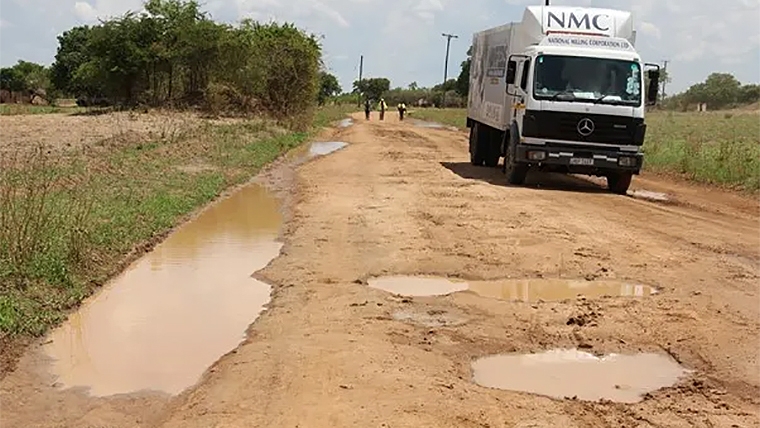
The reason the state of the roads are in far less than desirable condition (and the edging is a relatively minor complaint, the pot holes and ruts are far more serious) are due the continued use by (very) heavy traffic. These consist of logging trucks, milk tankers metal/quarry truck and other heavily weighted vehicles.
It is notable that the route towards the port or city is far more damaged than the route back out used when trucks are empty of their heavy loads.
In my case the most direct route into the city is via a secondary council road and cuts about 2-3 minutes off a 35 minute trip into the city (eat your heart out Aucklanders). The slightly longer route is also on a council road but a far wider and better formed one. It is actually 8 metres wide whereas the other lesser route 5.5 metres wide.
This brings in another point, anyone driving will have noted the protective curtain thrown up around any contractors working anywhere remotely close to a road to ensure the safety of the workers. Fair enough although there appears to be an overzealous approach at times which impacts upon the road users. Meeting 25 tonne trucks going at the legal limit (90kms) on 5.5 metre rural roads in my mind is far more of a safety risk to the oncoming driver etc., but councils and Waka Kotahi obviously consider this risk acceptable.
Much of the road condition is governed by funding, but before we even get to this councils do have the ability to restrict or limit which vehicles can use which roads. Why they don’t is a mystery as it would limit more heavy transport to ‘major’ roads thereby directing trucking to roads which are better suited to carry them and presumably reduce the maintenance costs on other roads less suitable. Plus of course make the ‘lesser’ roads safer for those who use them.
Not every region has multiple roads which could benefit from this but except where narrow or ‘weaker’ bridges are involved I can’t recall seeing much in the way of road use restrictions.
Funding is obviously an issue for all council roads and roading is quoted as soaking up about a quarter of council spending, this compares to 14% of council income coming from Waka Kotahi funding, leaving rates to pick up the balance.
Even given that councils administer 88% of all roading in New Zealand you can rest assured that the majority of funding still ends up going on State Highways, which may be what we want but it does mean that non-SH roads are the losers and that of course affects mostly rural folk.
Trying to find out how government calculates what councils get is a thankless task and seems to be on a need’s basis rather than by any formula created to recognise what is spent in a region or population.
Councils do have the ability to set a ‘special’ regional tax on fuel as Auckland has done but the scarcity of these seems to indicate that while people may be dissatisfied with much of the roading in their region their representatives at least are not prepared to impose more costs and would rather lobby central government.
We welcome your comments below. If you are not already registered, please register to comment
Remember we welcome robust, respectful and insightful debate. We don't welcome abusive or defamatory comments and will de-register those repeatedly making such comments. Our current comment policy is here.