
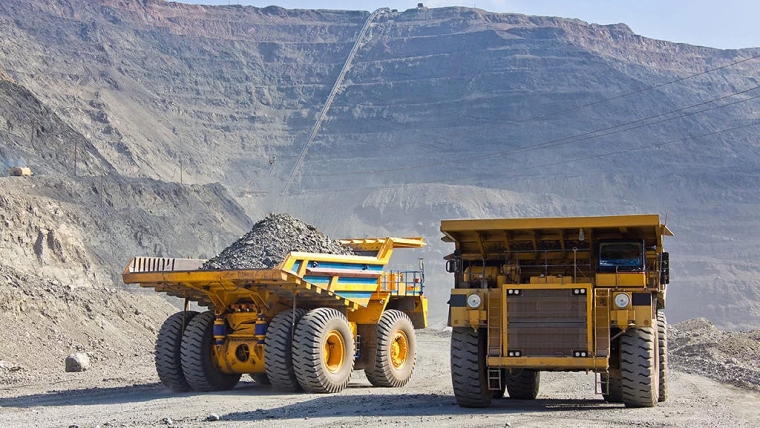
New Zealand has an opportunity to double the value of its mineral exports and mine for elements that are heavily sought after for electric technologies, a draft strategy says.
Resources Minister Shane Jones released a minerals strategy document with the Ministry of Business, Innovation and Employment (MBIE) on Thursday afternoon.
It proposed a plan which could help to grow the extractive industries in New Zealand through a stocktake on known mineral potential and relaxation of the consenting regime.
Greater awareness of available resources, and an easier process to get at them, would help to attract more investment in the sector and boost exports.
The minerals sector exported just over $1 billion in 2022 and Jones hopes to see that number double by 2035 — which would require an annual growth rate of 7.2% each year.
In a speech, Jones said New Zealand had a rich history of mining and the sector had played a significant role in how the country has developed over the past 200 years.
“Māori excavated pounamu, obsidian and adzite for use as tools, weapons and ornaments, followed by the increasing number of European settlers searching for valuable minerals, particularly gold, and coal,” he said.
Securing the social licence for mining had become difficult, not helped by communities having to cope with accidental deaths and environment fallout from abandoned projects.
But both the Government and the sector had learned from these mistakes and had “no appetite for irresponsible practices,” he said.
Clean green minerals
Mining had potential to boost regional opportunities, increase self-sufficiency, and be connected to global supply chains being built for transition to clean energy.
“We have a vast estate of minerals opportunities due to our dynamic tectonic history, yet we currently don’t have a clear picture of what we possess and its economic potential, the minerals needs of our country, or what we could supply to global markets,” he said.
One example given in MBIE’s consultation document was a gold mine in Reefton, where its operator had also found high grade antimony.
Antimony is used in semiconductors and as a flame retardant for electric vehicles and big batteries. The vast majority of the world’s supply comes from China and Russia.
Western countries would be eager to secure an alternate source of this semi-metal as they work to disentangle itself from these two authoritarian competitor countries.
MBIE also highlighted the potential to find lithium, which is used in rechargeable batteries, in the Bay of Plenty and the Far North.
While these energy-related minerals were heavily emphasised in the draft plan, the initial beneficiaries would likely be gold and coking coal miners.
MBIE said gold was projected to “contribute significantly” to mineral export earnings in the mid-to-long-term future and that there were “major opportunities” for steelmaking coal.
Less confidently, it said “some clean-tech minerals may also be able to be produced in New Zealand and sold into global supply chains”.
Drill baby, drill
Jones wants to relax the rules which make it difficult to establish a mine on conservation land, which makes up a third of the entire country.
He has promised not to touch Schedule 4 land—national parks, nature reserves, wildlife sanctuaries, and marine reserves—but wants to clarify where mining could occur.
Labour’s climate spokesperson Megan Woods said coal mining locks communities into dependence on a declining industry.
“Coal mining has no environmental benefits — especially when it’s on land that should be set aside for conservation,” she said in a press release.
Priyanca Radhakrishnan, the party’s conservation spokesperson, said Jones had shown he was willing to sacrifice native species for short-term economic gain.
“Shane Jones has said multiple times that he doesn’t care if a mine destroys habitat of native animals like kiwi or Archie’s frog,” she said.
Jones said, in his speech, that people who argued against mineral extraction in New Zealand but relied on things that were enabled by those resources were a sort of NIMBY.
The country should ask itself what could be achieved if it were able to enable more mineral extraction while still protecting the environment.
“Because in my view the opportunity is huge but it needs us as a country to get behind it”.
We welcome your comments below. If you are not already registered, please register to comment
Remember we welcome robust, respectful and insightful debate. We don't welcome abusive or defamatory comments and will de-register those repeatedly making such comments. Our current comment policy is here.