
The coalition Government plans to crack down on low-skilled work visas and devise a long term population plan to guide future policy settings.
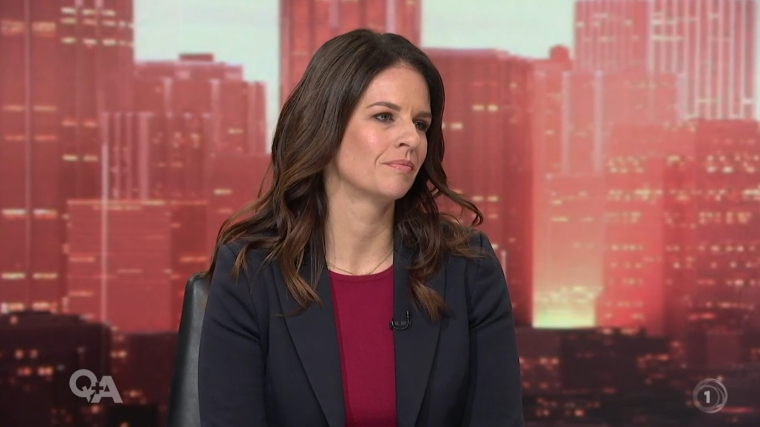
Erica Stanford, the Minister of Immigration, told TVNZ that current levels of net migration were unsustainable.
Net migration into New Zealand was 126,000 during 2023 and the numbers from January were also strong, with another 20,000 people arriving on work visas.
The Immigration Minister said that was not sustainable but had to be considered in the broader context of the covid-19 pandemic.
“Literally, the country emptied out. I think in 2021, we had negative net migration of about 15,000. So you do need to look at it in that context and not catastrophize,” she said.
She said high net migration was having some impact on inflation and housing costs, but there were positive and negative effects in both cases.
While New Zealand could not cope with 126,000 arrivals every year, this large inflow of new workers was “recuperation migration”.
The other important factor was that many work visas were for two or three years, but because few had been issued during the covid years there weren’t any workers leaving.
“So under normal circumstances, you would have people leaving and people coming in. Part of this high net migration is the fact that people aren't leaving yet”.
Her expectation was that net migration would get back into “equilibrium” over time as the covid disruption normalized.
Readers may remember the difficulty booking in for a haircut shortly after the first lockdown ended. That spike in demand smoothed out quickly and migration may do the same.
Stanford said she wasn’t going to set a specific cap on migration levels but was taking a “careful look” at what was happening.
“What I do not want to do, is what Labour did last year: a knee jerk reaction without thinking about the unintended consequences”.
Long-term planning
The Productivity Commission, the Treasury, and now Prime Minister Christopher Luxon have all asked for a Government Policy Statement on population growth.
This would be a document that plans for a particular population growth rate and matches it with the infrastructure and services required, officials call this ‘absorptive capacity’.
Stanford told TVNZ this work was now underway but the immediate focus was on adjusting the short term settings for “low skilled migrants”.
“When we left Government, half of the migrants we were bringing in were skill level one and two. Those are your doctors, nurses, and professionals”.
“That has completely changed: 52% of the people we brought in last year were skill level four and five. That is your cleaners, fast food chefs, and laborers”.
She said this was because of the accredited employment visa, a program where employers could sponsor migrants for jobs paying the median wage and that were first offered locally.
The minister wouldn’t talk specifically about what changes she was considering, but said the accredited employee work visa rules would be tightened.
“If you look back to what we used to do, I'm considering all of those things and some new things,” she said.
This could include more stringent labour market checks, such as pushing employers to prove they have been unable to fill these jobs from the local labour pool.
“We are basically operating on a pinky promise with employers, at the moment,” she said.
Short term changes might be announced in “the next month or so” but the Government policy statement was a piece of work for the “very long term” and would come later.
The accredited work visa has been under review since August last year and that report was due to be delivered last December.
Stanford said she hasn’t seen it yet but will hold off on policy changes so that any findings can be factored into the revised visa settings. It is expected to be released in the next few weeks.
We welcome your comments below. If you are not already registered, please register to comment
Remember we welcome robust, respectful and insightful debate. We don't welcome abusive or defamatory comments and will de-register those repeatedly making such comments. Our current comment policy is here.