
By Bernard Hickey
The Government is sticking to its current supply-led strategy for dealing with Auckland's housing unaffordability problems, despite yesterday's REINZ data showing a surprisingly strong bounce-back in prices and volumes in March after just 6 months of a slowdown from previous Government measures.
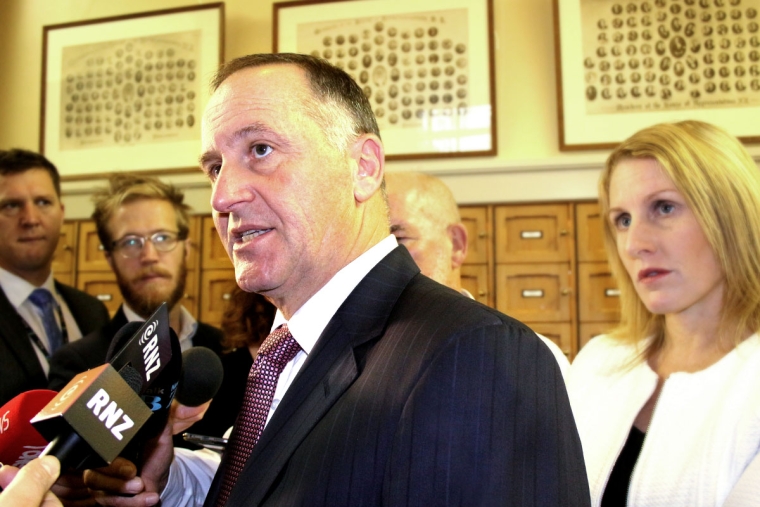
Prime Minister John Key and Finance Minister Bill English said in their first comments after the REINZ surprise that they would continue on with their push to increase housing supply, rather than take fresh demand-side efforts similar to those adopted in last year's Budget.
The measures developed in less than six weeks and announced in May last year included the two year bright line test to ensure property speculators paid tax on their capital gains and new disclosure rules for local and overseas rental property investors. They started from October 1 and were quickly followed up by the Reserve Bank's new rules limiting Auckland investors to 70% loan to value ratios from November 1. The announcements in May last year slowed the Auckland market from September to February, but the problems with housing supply being insufficient to match demand have fired up the market again.
Key said he believed the Government's strategy of building supply would work, "but you are battling the fact that Auckland is a very attractive place to live in."
"I think the strategy in the end will prove to be right," he told reporters in Wellington, pointing to a 'lag effect' from recent additions to supply.
Asked if it might constrain the Reserve Bank from lowering interest rates again, Key said: "That's not the indications from the Reserve Bank. He's (Graeme Wheeler) been aware of what's happening with house prices and he's lowered interest rates recently."
'Pressure on Auckland Council'
English also tried to highlight the positives, but also noted the Government's expectations of the Auckland Council on the Unitary Plan.
"We've got a lot of migration with Kiwis coming home and economic opportunity in Auckland, so it's good to see the demand," English said.
"We've been working with the Council, putting some pressure on to encourage them to expand supply faster and clearly we are still not going fast enough," he said.
"The demand measures were always going to have some impact. It's a bit hard to tell exactly how much, but we've always said the main issue here is getting more supply faster - so that means more consents faster, more building consents faster, getting new developments like Three Kings through the process and the Environment Court faster so we can get houses people can afford."
Asked if the Government needed to adopt more demand-side measures, he said: "I think we need more speed on supply. The government's cranking up its own supply, particularly through Crown land. The Council's made extensive efforts, it's still got more to do both for infrastructure and housing."
"We are working as hard as we can on the supply side and the primary responsibility for that lies with Auckland Council. We are very keen to see them understand and state clearly that they are going to accommodate as much supply as is required to eventually stabilise those prices," he said.
Slow start to Crown land programme
Labour Housing spokesman Phil Twyford said the REINZ figures showed the Government's bright line test had failed and he called on the Government to take more meaningful action.
"The Government must embark on a massive state-backed building programme to flood the market with affordable homes, ban offshore speculators from pushing prices beyond reach of Kiwi families, and genuinely reform restrictive planning rules," he said.
He followed up by releasing documents obtained under the OIA showing a list of Crown land sites for house building, some of which included cemeteries, power substations and Government House that can't be built on. One of the centre-pieces of last year's Budget was a plan to spend NZ$54 million to free up 500 ha of Crown land for house building.
Housing and Building Minister Nick Smith told One News' Katie Bradford he had not seen the list, which was from 2007.
However, Smith did say that all of the NZ$54 million had been allocated and just 25 ha of the land had been secured, raising fresh concerns about the speed of the supply response from Government.
A net 3,890 people migrated to Auckland in February and Auckland's natural population is currently growing at a rate of around 1,200 a month, which means Auckland needed to build 1,700 houses at a rate of three people per house to keep up with the population growth. Auckland consented 787 new dwellings in February, less than half that number.
Even accounting for February being a naturally slower month, the trend for new consents in recent months has been around 800 a month and falling. That's well below the 1,100 seen as needed to cope with ongoing regular population growth, let alone eat into the existing shortage of at least 25,000 houses.
We welcome your comments below. If you are not already registered, please register to comment
Remember we welcome robust, respectful and insightful debate. We don't welcome abusive or defamatory comments and will de-register those repeatedly making such comments. Our current comment policy is here.