

Here's our summary of key economic events overnight that affect New Zealand with news central banks may be maintaining crisis stimulus and a view that this recovery is fragile, but the world's largest economies are experience a V-shaped boom the likes of which we haven't seen in two generations.
The latest May updates of American factory PMI's shows them expanding faster, in fact to a series high. And their service sector is expanding faster than that. Both are in full recovery mode. With all key categories rising (new orders, employment, etc.) the main interest in these surveys is on the price pressures. This survey noted: "The steep rise in costs fed through to the sharpest increase in output charges since data collection began in October 2009, with record rates of inflation registered for both goods and services as soaring demand boosted firms’ pricing power." The inflation genie may be out of the bottle.
But some Fed officials are now warning that a softer period may be ahead - especially for employment.
Consumers may be flush and buying, and factories roaring - but there was a surprise in their residential real estate market. April sales volumes were expected to rise +2%, but the data shows they actually fell -2.7%. April was supposed to bounce back from the -3.7% retreat in March but it compounded the earlier month fall. That is six straight months of declining sales since October 2020. It is as though Americans are shunning their housing market as mortgage rates start to rise - even though those rises are quite minor. "Supply" has been the excuse for a while now and that may be the case. Median prices are +19% higher than a year ago. Further, mega corporate landlords are snapping up many homes before the public can see them.
Canadian retail sales in March were stronger, up at an annual rate of +3.6% when a +2.3% rise was expected. (The year-on-year gains is pandemic-affected of course.) From March 2019 they are up +8.6%.
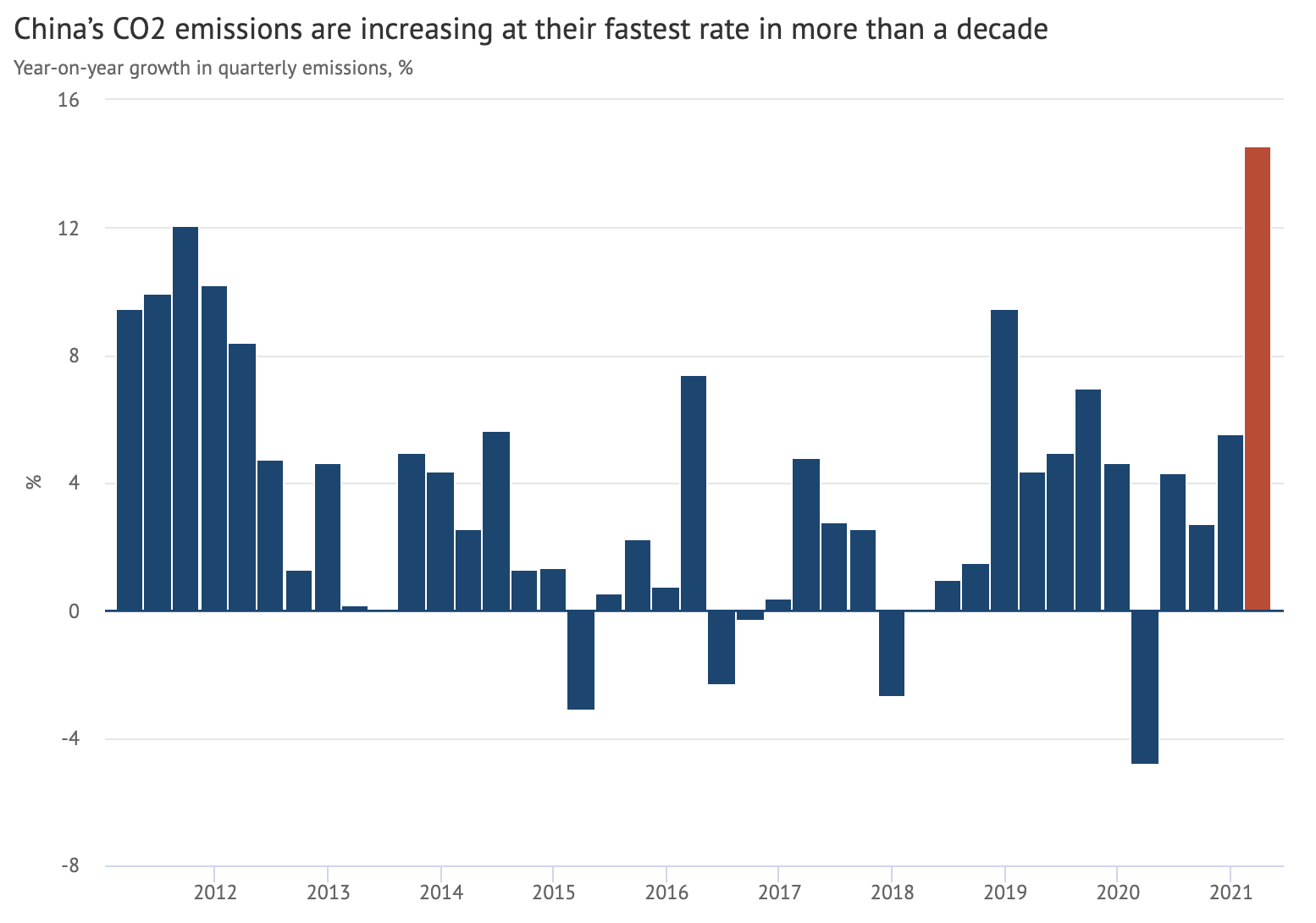
In China, their tax take surged sharply in 2021, basically split between Beijing and local governments. Income taxes are up an impressive +27%, and their GST is up +24% year-on-year. This is clear evidence the Chinese economy is on a good upswing.
In Japan, there is also some evidence that consumers are feeling more bullish that they have for a long time.
In Europe, we may be seeing a revival in their overall economy too. The May flash PMIs shows demand surging at its fastest rate for 15 years. Both manufacturing and services are benefiting, with strong rises for new orders, and employment growth seems to be following. They also recorded their sharpest rise in output price inflation on record. The German rise is at the core of these gains, although other countries are now showing faster expansions. The UK and France are also expanding faster.
All this positivity among business prospects is improving consumer sentiment - but they haven't yet got to the stage where optimists outnumber pessimists. A net scepticism still pervades Europe's consumers.
Globally, iron ore and copper prices look like they have topped out. And shipping prices are showing the same. After hitting an index level of 3200 and its highest in more than ten years, it has settled back to over 2800.
The latest global compilation of COVID-19 data is here. The global tally is still rising, now 165,694,000 people have been infected at some point, up +644,000 in one day, or +3.3 mln over the past week and still largely driven by rises in India and Brazil. And an outbreak of black fungus is piling on the misery in India. Global deaths reported now exceed 3,434,000 and up +14,000 in one day and +85,000 in a week. Vaccinations in the world are still rising but at a slower pace, now up to 1.59 bln with only +180 mln doses given in the past week. In the US almost half of their population (48.8%) have had at least one dose as they struggle to keep up the pace of vaccinations. Now approaching 40% of Americans have been fully vaccinated (128.4mln people). The number of active cases there has fallen to 5,874,000 with fewer new infections than recoveries recently and steady progress.
Wall Street is little-changed, with the S&P is up +0.1% in afternoon trade. For the week it is an insignificant -0.3% lower. Overnight, European markets all rose about +0.5% - except London which booked a small loss. Yesterday, Tokyo ended its session up +0.8% on the day giving it a similar weekly gain. Hong Kong was flat yesterday. Shanghai closed down -0.6% and ending the week where it started. The ASX200 ended a mere +0.2% higher and the same net gain for the week. The NZX50 Capital Index which also ended up +0.2% on the day with the weekly rise was +0.7%.
The UST 10yr yield starts today unchanged at 1.63% from this time yesterday and unchanged in a week. The US 2-10 rate curve is at +147 bps and a little flatter. Their 1-5 curve is unchanged at +78 bps, while their 3m-10 year curve is also unchanged at +163 bps. The UST 30day bill is back down to yielding 0%. The Australian Govt ten year benchmark rate is down -1 bp at 1.68%. The China Govt ten year bond is down -4 bps at 3.09% and building an unusual flattening trend. And the New Zealand Govt ten year is also down -4 bps at 1.84% making it a -7 bps fall in a week.
The price of gold starts today up +US$6 from this time yesterday at US$1880/oz. This is a rise of +US$38 in a week.
Oil prices start today recovering all of yesterday's US$1.50 fall and now just over US$63.50/bbl in the US, while the international Brent price is just on US$66.50/bbl. But this is a fall of -US$2 over the week.
The Kiwi dollar opens today at 71.7 USc and lower since this time yesterday. Against the Australian dollar we are marginally firmer at 92.7 AUc. Against the euro we are unchanged at 58.9 euro cents. That means our TWI-5 starts today still at 73.2 and that is -84 bps lower than at this time last week, a -1.1% devaluation.
The bitcoin price is now at US$35,686 and -10.3% down from this time yesterday. Volatility in the past 24 hours has still been extreme however at +/- 10.8%. Over the past week, bitcoin has slumped -26% or -US$14,372. Janet Yellen's US Treasury Department announced that it is taking steps to crack down on crypto currency markets and transactions, and said it will require any transfer worth US$10,000 or more to be reported to the US IRS. This will probably cause further flight of international crypto holders from US crypto exchanges. The bitcoin rate is charted in the exchange rate set below.

The easiest place to stay up with event risk today is by following our Economic Calendar here ».

We welcome your comments below. If you are not already registered, please register to comment
Remember we welcome robust, respectful and insightful debate. We don't welcome abusive or defamatory comments and will de-register those repeatedly making such comments. Our current comment policy is here.