

The Reserve Bank says it will push ahead with developing a framework to limit the ratio of debt home buyers can borrow in comparison to their incomes, but won't be setting the interest rate banks use to test borrowers' ability to cope with rising interest rates at this stage.
The Reserve Bank has published its response to feedback received on its proposed policy for debt serviceability restrictions (DSRs) on residential mortgage lending, which was issued in November. Consultation closed on February 28. (See our coverage of what the Reserve Bank said in November here and here).
It sought feedback on the merits and potential design of two types of DSRs:
- Restrictions on debt-to-income (DTI) ratios – which impose a cap on debt as a multiple of income; and
- A floor on the test interest rates used by banks in their serviceability assessments which test the ability of borrowers to continue repaying their loans if interest rates rise to a certain level.
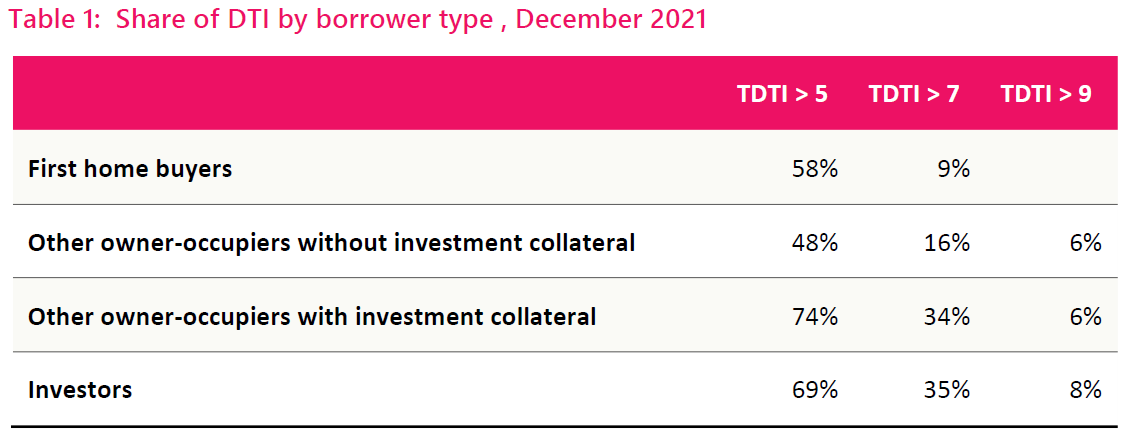
“Our modelling indicates that first-home buyers would be the least impacted by a DTI restriction, with investors impacted the most as they tend to borrow at higher DTIs than other groups on average," Reserve Bank Deputy Governor and General Manager of Financial Stability Christian Hawkesby says.
"This aligns with our Memorandum of Understanding with the Minister of Finance on macroprudential policy which states that in designing DSRs, we will have regard to avoiding negative impacts, as much as possible, on first-home buyers. Additionally, the use of speed limits and exemptions can further mitigate any negative long term impacts on first-home buyers."
"We believe that DTI limits are an important additional tool for reducing financial stability risks and supporting house price sustainability, and would fill a gap that is not covered by existing regulations. We plan to have the framework finalised by late 2022, so that restrictions could be introduced by mid-2023 if required," says Hawkesby.
This pushes back the timeframe outlined in November when the Reserve Bank said banks needed to prepare their systems for the potential introduction of a regulated DTI limit no later than the end of 2022, saying a DTI restriction could be implemented by the fourth quarter of 2022, and a test rate floor could be implemented in the second quarter of 2022.
Hawkesby notes banks’ test interest rates have now started rising in line with market rates, and the Reserve Bank expects to see a slowdown in high-DTI lending over coming months.
"The new Credit Contracts and Consumer Finance Act regulations, changes to the tax treatment of investment property, and tighter loan-to-value ratio [LVR] restrictions on owner-occupiers are also having an impact on the availability of mortgage credit. We therefore do not see an urgent need to impose an interim test rate floor at this stage, but we are monitoring the situation closely and do not rule out this option if there is a resurgence of risky lending in the housing market," Hawkesby says. "We will undertake further work on the preferred methodology for this tool, in case it is required in future."
As reported by interest.co.nz over the weekend, ANZ says people applying for mortgages currently need to be able to satisfy it that they would be able to service debt at an interest rate of 6.7%. And ASB says it’s testing applicants using a rate of 6.85%. The two banks’ standard one-year to five-year fixed mortgage rates range from 4.49% to 6.45%.
In November's consultation paper the Reserve Bank assessed the impacts of introducing a DTI cap for borrowers of six or seven times gross income, and a test interest rate floor for bank lenders of 7% or 8%. However the Reserve Bank stressed these were illustrative models and might not necessarily be where it would set such restrictions.
The latest quarterly Reserve Bank DTI data, for the December quarter, showed a levelling off of DTI ratios following very sharp increases over the past couple of years as the housing market went into overdrive.
The table below comes from the Reserve Bank.
The Reserve Bank says it uses macroprudential tools, such as LVR restrictions, to reduce the financial stability risks associated with boom-bust cycles in the economy. This, it says, helps meet its statutory purpose of promoting the maintenance of a sound and efficient financial system.
The Reserve Bank's attempts to add a DTI tool to its macro-prudential toolkit date back to at least 2016, but were previously stymied due to politicians' concerns about the tool's potential impact on first home buyers. The central bank previously consulted on the potential introduction of a DTI tool in 2017.
We welcome your comments below. If you are not already registered, please register to comment
Remember we welcome robust, respectful and insightful debate. We don't welcome abusive or defamatory comments and will de-register those repeatedly making such comments. Our current comment policy is here.