
One of Donald Trump’s first acts as president was withdrawing from the Paris Climate Accord, leaving the United States alongside Iran, Libya, and Yemen as the only non-members.
For the past decade, there has been a global consensus that climate change is occurring and must be mitigated where possible. But some activists are pushing for countries to give up and focus solely on surviving in the hotter climate.
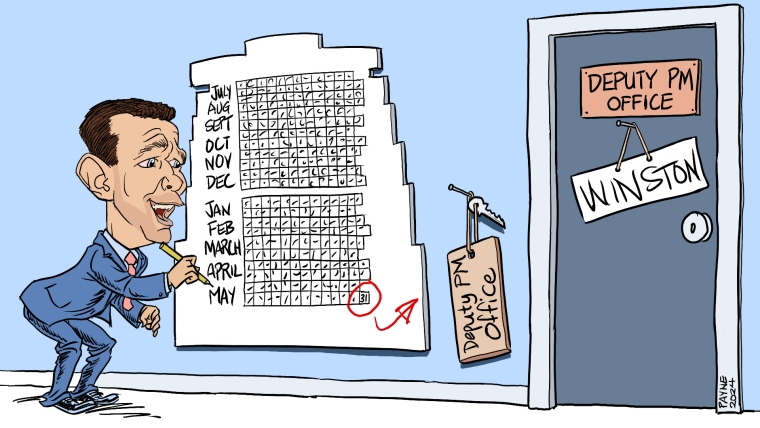
David Seymour, leader of the Act Party and soon-to-be Deputy Prime Minister, told Newstalk ZB the New Zealand Government should consider withdrawing from the Paris Accord.
And when asked about the newly announced 2035 emission reduction target, Seymour said he supported it, but only because it was a Cabinet obligation.
“There's a wider question of whether the Government of New Zealand should be committed to the Paris Accord when half the world appears to be pulling out of it anyway,” he said.
The Act Party opposed the Accord in 2016, when it was still a one-MP party, and intended to vote against the Zero Carbon Act but missed the final vote.
What was once a fringe view, supported by just one MP, may be gaining traction. The Act Party secured 8.6% of all votes in 2023 and NZ First, which also campaigned against some climate policies, won 6%.
Polls show the public is concerned about climate change and believes the Government is not doing enough to mitigate risks. But these concerns have fallen behind more immediate economic problems, at least in the regular IPSOS issues monitor.
The Act Party and two close allies, the Taxpayers’ Union and Federated Farmers, have all voiced opposition to the Government’s new target and the Paris Climate Accord itself.
Jordan Williams, a political campaigner and executive director of the Taxpayers’ Union, said in a press release that the announcement had “harpooned” the Government’s growth plans.
“[Climate Minister Simon] Watts and his Cabinet colleagues are not going to be around in a decade to have to pay the bill, but are doubling down on Paris at the very time our trading partners are pulling back,” he wrote.
It is not particularly true that New Zealand’s trading partners are pulling back on their Paris commitments, nor that the Government is “doubling down” in any meaningful way.
China has been building renewable energy and aims to begin reducing emissions before 2030. Australia, the United Kingdom, and the European Union have all maintained or strengthened their targets in recent years.
New Zealand’s new target has been described as “shockingly unambitious” as it does not even maintain the current rate of emissions reductions. The Climate Change Commission recommended a 66% cut but the Government opted for 51%.
Even that goal was too much for Federated Farmers, which argued in a press release that it was 'completely beyond reach' and would force the conversion of hundreds of thousands of hectares of land into forestry for carbon offsets.
"There is a very real risk that we could become the great pine plantation of the South Pacific — hardly something to be proud of,” a spokesperson said.
We welcome your comments below. If you are not already registered, please register to comment
Remember we welcome robust, respectful and insightful debate. We don't welcome abusive or defamatory comments and will de-register those repeatedly making such comments. Our current comment policy is here.