
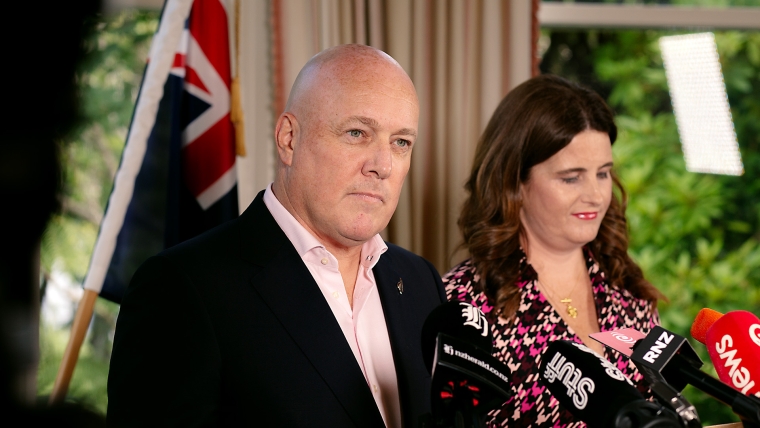
Prime Minister Christopher Luxon has begun the political year with a ministerial reshuffle aimed at addressing perceived weaknesses linked to the National Party's declining poll numbers.
Finance Minister Nicola Willis has been given a rebranded Economic Growth portfolio, previously held by Melissa Lee as Economic Development, and will relinquish her Public Service portfolio to Judith Collins.
The Minister of Finance is already regarded as the lead economic minister, but this portfolio formalises that role. Willis said she was now licensed to engage with business innovators and push key reforms in all policy areas.
“This new portfolio is about delivering changes across government to unleash innovation, investment, job creation and growth in the New Zealand economy,” she told reporters.
“Our plan is about more than simply getting through the recent economic data, it's about tackling the underlying issues which have constrained New Zealand small businesses exporters and productivity rates for far too long”.
However, the more significant change in the line up is the demotion of Minister for Health Shane Reti, who has sometimes struggled to rise to the challenges in the sector. Simeon Brown, who is more closely aligned with Luxon, will take over the difficult portfolio to address what is increasingly seen as National’s biggest vulnerability
The Prime Minister said Reti had “set some good foundations” in the healthcare portfolio but Simeon Brown was “the person we need to take the agenda forward”. He said Brown had proved his effectiveness in the Local Government, Energy, and Transport portfolios, which have now been given to Simon Watts and Chris Bishop respectively.
Luxon said he wanted ministers with health responsibilities, including associate ministers, to be primarily focused on that area. Brown will retain his largely symbolic Auckland portfolio and State-Owned Enterprises, but will otherwise work full-time on fixing Health NZ.
While the reshuffle was attributed to a strategic rethink during the summer break, it may also reflect concerns over the National Party's declining poll numbers. Interest.co.nz’s average suggests the National Party has lost six percentage points since the election and the gap between the Coalition and Opposition has shrunk from over 11 points to just 3.5.
Fleur Fitzsimons, the acting National Secretary for the Public Sector Association, said the lost support was because of underfunding in the healthcare sector.
"The polls are showing New Zealanders are far from impressed with the Government’s rushed and reckless austerity agenda — they are seeing what it really means for them,” she said in a statement.
"We wish the new Ministers well, but their success will depend on their ability to secure increased funding for health and the public service, not more irresponsible cuts”.
Other pundits have speculated the party is losing support due to its compromise position on the Treaty Principles Bill and an inability to fix the economy in its first year, as well problems in the health portfolio. These include downscaling Dunedin Hospital, managing Health NZ budget blowout, and the missteps over cancer drug funding.
Shane Reti isn’t thought to have made any specific mistake in the portfolio, only that it has become a focus for voters and Luxon wants a top minister to deliver results before the election in 2026.
The reshuffle also saw recognition for up-and-coming MP James Meager, who has been managing the select committee process for the Treaty Principles Bill. He has been given a couple of easy portfolios—Hunting and Fishing, Youth, South Island, and Associate Transport—and presumably the pay increase which comes with being a minister.
A full list of changes and responsibilites can be found here.
We welcome your comments below. If you are not already registered, please register to comment
Remember we welcome robust, respectful and insightful debate. We don't welcome abusive or defamatory comments and will de-register those repeatedly making such comments. Our current comment policy is here.