
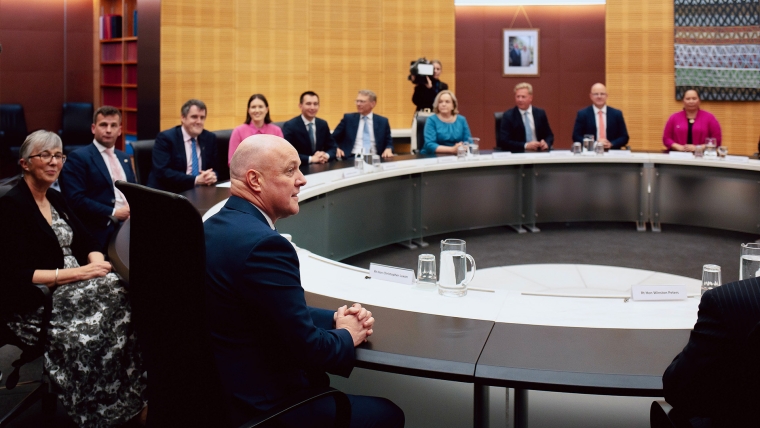
The Coalition Government has emerged relatively unscathed from a raucous and controversial start to its term with its 100 day plan completed as promised.
RNZ has published a helpful spreadsheet showing which of the 100 day commitments have been achieved and which ones are ‘questionable’ — but most have been met in some form.
Many of the big ticket items on the list were repeals of big Labour policies: The Reserve Bank’s dual mandate, the Auckland Regional Fuel Tax, Clean Car Discount scheme, Fair Pay Agreements, Affordable Water Reform, the Māori Health Authority, and Smokefree laws.
The merits of these bits of legislation are debatable but National campaigned on getting rid of them all—except Smokefree—and secured the support of a majority of voters.
Other non-legislative policy reversals were also on the list. Revising school curriculum, scrapping light rail projects, and stopping work on Lake Onslow and Income Insurance.
New Zealand First got a symbolic win with a commitment to ‘stop work’ on He Puapua when, in reality, it has been gathering dust since 2022.
In total, 24 items on the 49 point plan were policy reversals of some kind, another eight were operational actions, and the remaining 17 were new policies.
Most of these were just commitments to simply ‘begin’ work but a bunch have been carried through to completion.
These include setting up a fast-track consenting process, banning cellphones at schools, un-banning pseudoephedrine, banning gang patches, making the Medium Density Residential Standards optional, re-establishing 90-day trial periods, and starting a new transport plan.
Allowing the sale of cold medication containing pseudoephedrine was a popular policy win specific to the Act Party.
In a press release, leader David Seymour said his party’s policies had formed “the leading edge” of the Government’s agenda.
“Our coalition wins have taken New Zealand far further toward the ideals of freedom, choice, and personal responsibility than what Kiwis would have seen without us”.
It was true that a “large share” of the new Government’s time had been spent repealing Labour legislation but it was “essential to clean the slate” for new policies, he said.
Onwards
The Coalition Government now faces the more difficult work of coming up with replacements for things they have repealed.
Housing growth, water reform, and transport funding are all areas that need attention and where the coalition’s replacements are still in draft form.
While the 100 days have progressed, Finance Minister Nicola Willis has been quietly working away on the Budget. This process is confidential but she appears to be finding it difficult.
She has repeatedly cast doubt on whether the Crown accounts will be back in surplus by the end of the Parliamentary term as promised during the campaign.
There is no shortage of financial need across the Government and her fellow ministers will each be making the case as to why their portfolio should be an exception to the cost cuts.
Some will have strong arguments. The NZ Defence Force is in poor shape, health needs are rising year after year, and a lot of new infrastructure and maintenance is needed.
Cameron Bagrie, an independent economist, told Newshub the Finance Minister was chasing an “impossible trinity” in promising tax relief, a return to surplus, and sustained core services.
She would only be able to deliver on two out of the three, he said.
Tax cuts are non-negotiable and so she may be facing a choice between cutting core services—not just back-office functions—and getting back into surplus when planned.
Either decision might be a hard sell while sitting around the Cabinet table with both fiscal hawks and economic nationalists.
Popularity
While the first 100 days have gone as planned from a policy perspective, the new Government has faced an onslaught of opposition to its sudden change in direction.
The biggest areas of controversy have been the Act Party’s Treaty Principles Bill, rejection of using te reo Māori in public agencies, and the decision to scrap Smokefree laws which would have eventually banned tobacco.
In amongst all that, there have already been mildly misbehaving ministers and minor party leaders who seem to be beyond the control of Prime Minister Christopher Luxon.
There hasn’t been a lot of positive media coverage of the coalition, something Seymour seems to have taken personally, and the Government has not enjoyed a honeymoon.
A Taxpayers’ Union–Curia poll released on Friday, showed the National and Act parties losing support, while NZ First and the Greens gained.
Individual polls do bounce around a lot, but this one had bad news for Luxon. His personal popularity dropped from already low levels and is now underwater.
A net 5% of voters have an unfavorable opinion of the Prime Minister. He remains ahead of his coalition partners (who are on -8% and -12%) but behind his main rival.
More bad news: a net 3% of respondents thought the country was headed in the wrong direction. That measure had been improving since the election but dropped in this poll.
Labour leader Chris Hipkins had a net favorability rating of just 2%—not exactly Mr. Popular—and his party appears to have been losing support slightly.
We welcome your comments below. If you are not already registered, please register to comment
Remember we welcome robust, respectful and insightful debate. We don't welcome abusive or defamatory comments and will de-register those repeatedly making such comments. Our current comment policy is here.