
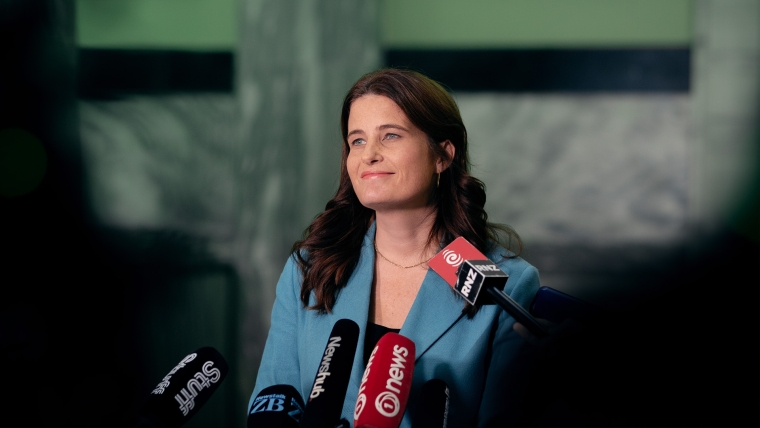
Finance Minister Nicola Willis has been surprised by the number of policies left unfunded by the previous government, which she says violate the spirit of the Public Finance Act.
The legislation was designed to prevent a repeat of the handover from the Fourth Labour Government, which left behind a worse fiscal situation than it had disclosed.
Willis has alleged the Sixth Labour Government has left behind similar, albeit smaller, problems as the Fourth to the tune of “billions of dollars”.
This includes fiscal risks that were not fully explained before the election because of commercial sensitivity and government programmes that were funded on a short-term basis.
While there were legitimate reasons to use short-term funding, she said many were “extremely disingenuous” in this case.
“This is because it makes the books look better in future years, even though it is highly unlikely ministers genuinely intended to stop funding those programmes,” she said.
Willis gave three examples—funding for Pharmac, school lunches, and cyber security in schools—although all three had been disclosed before the election.
Treasury was still working through the full list of short-term funding that would expire during the forecast period and the final number was likely to be in the billions, she said.
“It would have been helpful, pre-election, to have collected, in one place, a list of all of the programs the Government had chosen to short-term fund with an explanation of why”.
“Because in many cases, when I'm asking that question … there is no good answer.”
Willis said she would seek advice on whether the Public Finance Act could be amended to require a list of all time-limited funding and more transparency around fiscal risks.
Already exists
Grant Robertson, Labour’s finance spokesperson, said the allegations were not true and that New Zealand already has one of the most transparent public finance systems in the world.
“The thing Nicola Willis wanted today already exists. It's called the Budget. We put it out every year and all of those things are in here,” he said.
Robertson pointed to page 89 of Budget 2023, which showed school cybersecurity services were being given funding for just the next year — $31 million.
However, there isn’t a single list of short-term funding commitments. That would need to be compiled by going through the Budget documents line-by-line.
Robertson himself did not know how many times short-term funding had been used in the last budget.
He also admitted that Treasury had a preference for funding to be included in the baseline and projected forward forever, but he didn’t think it was always appropriate.
Combing the books
Willis said while many of these details could be found by going through all the Budget documents with “a fine tooth comb”, that wasn’t sufficiently transparent to the public.
Providing a list of time-limited programmes and more analysis about their implications would be an “important step forward for fiscal responsibility”.
She said the return to surplus and debt reduction forecast in the pre-election update wasn’t credible if it was based on lots of short-term funding expiring in the future.
“If it depends on them stopping funding for things they don’t intend to stop funding, then actually those commitments aren't worth the paper they're written on”.
Willis stopped short of saying the pre-election update misrepresented the fiscal position of the New Zealand government, but said the Public Finance Act may need tightening.
Any changes to the legislation will be outlined as part of a mini-budget, which will be released on December 20th alongside the half-year economic and fiscal update.
Willis said it would lay out funding for “time-sensitive decisions” the Government had made, a set of fiscal responsibility practices, and a high-level fiscal approach.
This will include establishing a Cabinet Expenditure Control Committee and directing public service agencies to cut their baseline spending by approximately 6.5%.
We welcome your comments below. If you are not already registered, please register to comment
Remember we welcome robust, respectful and insightful debate. We don't welcome abusive or defamatory comments and will de-register those repeatedly making such comments. Our current comment policy is here.