
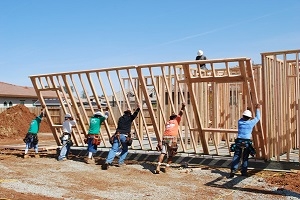
The number of building consents issued for new homes ticked up in May, but is still well short of what is required in Auckland, where new building starts still lag well behind migration-fuelled population growth.
The latest figures from Statistics NZ show 2794 new dwellings were consented throughout the country in May, up from 2106 in April and up 10.9% compared to May last year.
In the 12 months to May 30,645 new homes were consented, up 8% compared to the previous 12 months.
In Auckland where the housing shortage is greatest, 885 new dwellings were consented in May, compared to 726 in April and 732 in May last year
However that is still less than three quarters of the estimated 1230 new homes that need to be built in Auckland each month just to keep pace with the regions's high, migration-fuelled population growth.
That suggests Auckland's housing shortage, already estimated at more than 30,000 homes, is continuing to increase by several hundred homes a month.
Within the Auckland region the biggest area of new building activity remains Albany where 208 new homes were consented in May, followed by 159 in Rodney,
But only 65 homes were consented in Manurewa -Papakura and 88 in Franklin, where property prices tend to be cheaper.
In the Waikato, 376 new homes were consented in May compared to 264 in April and 317 in May last year.
In the Bay of Plenty 220 new homes were consented compared to 177 in April and 242 in May last year.
One of the biggest increases in new consents was in the Wellington region, where 227 new homes were consented in May, compared to 128 in April and 138 in May last year.
There was also a lift in Canterbury, where 477 new homes were consented in May, up from the 333 consented in April but well down from the 618 consented in May last year.
In a First Impressions note on the figures, Westpac's Acting Chief Economist Michael Gordon although the annual number of new consents issued in Auckland hit a new high for the current cycle of 10,379 in the 12 months to May, this remained "well short of what's needed to match population growth."
Eathquake related builds in Christchurch had slowed over the last couple of years and now appeared rto have settled around 'business as usual' levels, Gordon said.
We welcome your comments below. If you are not already registered, please register to comment
Remember we welcome robust, respectful and insightful debate. We don't welcome abusive or defamatory comments and will de-register those repeatedly making such comments. Our current comment policy is here.