

It is not just the number of new homes being built that is declining, major alteration work on existing homes is also in decline, although the amount of money homeowners are spending on alterations continues to rise.
According to the latest building consent figures from Statistics NZ, building consents were issued for 37,239 new dwellings last year, down 25% compared to 2022.
Building consents are also required for structural alterations to existing residential properties.
They are not required for mere redecorating, such as painting or replacing cupboards and benchtops.
But they are required for work altering the structure of a building, such as extending a dwelling or building a garage.
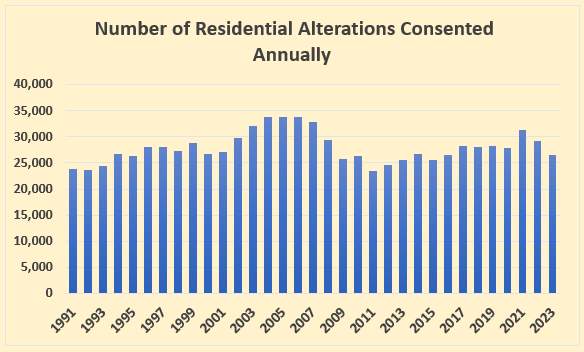
Building consents for alteration work have also been declining, but at a slower rate than consents for new dwellings.
Last year 26,540 consents were issued for 26,540 residential alterations. That's down 9.4% compared to 2022, and down 15% compared to 2021, and was the lowest number of alteration consents issued in a year since 2016.
Residential alteration work reached peak popularity over the three years from 2004 to 2006, when almost 34,000 consents a year were issued, but from 2008 onwards the numbers began a fairly slow but steady decline.
However, while the number of residential alterations is declining, the amount of money being spent on them continues to increase.
The average amount spent on residential alterations last year reached an all time high of $94,759, up 11% compared to 2022, and up 22% compared to 2021.
Which meant that even with the fall in the number of alteration jobs consented over the last two years, the total amount being spent on such work kept increasing, hitting a record high of $2.515 billion last year.
However the annual increases in alteration spending is starting to flatten out too, being up just 0.8% last year compared to 2022, while total spending in 2022 was up 3.1% compared to 2021.
If those trends continue this year, building firms will no longer be able to rely on an increase in revenue per job to keep their own turnover up, even as the number of jobs they are undertaking falls.
And that could start to put a squeeze on the finances of some building companies and their suppliers.
The comment stream on this story is now closed.

•You can have articles like this delivered directly to your inbox via our free Property Newsletter. We send it out 3-5 times a week with all of our property-related news, including auction results, interest rate movements and market commentary and analysis. To start receiving them, register here (it's free) and when approved you can select any of our free email newsletters.
We welcome your comments below. If you are not already registered, please register to comment
Remember we welcome robust, respectful and insightful debate. We don't welcome abusive or defamatory comments and will de-register those repeatedly making such comments. Our current comment policy is here.