

Here's my Top 10 links from around the Internet at 10:00 am today in association with NZ Mint.
Bernard is back tomorrow with his version.
As always, we welcome your additions in the comments below or via email to bernard.hickey@interest.co.nz.
See all previous Top 10s here.

1. The Abenomics experiment
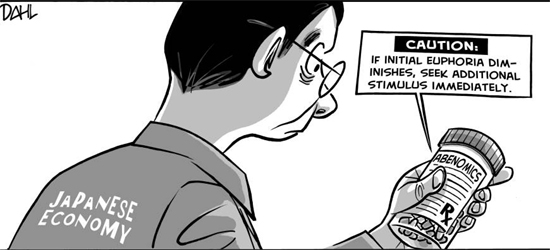
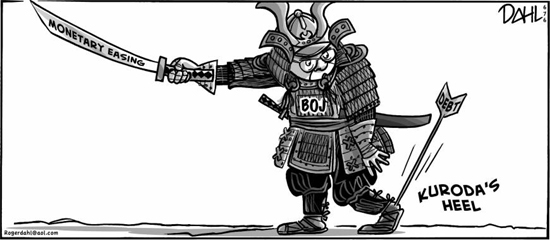
It stuns me how big and comprehensive the Japanese efforts are to be to get their economy out of its 20 year funk. I reckon they are dicing with economic death. But Joseph Stiglitz doesn't see it that way.
He says Japanese Prime Minister Shinzo Abe is doing what many economists have been calling for in the US and Europe: a comprehensive program entailing monetary, fiscal, and structural policies. As many Japanese rightly sense, Abenomics, with its focus on monetary, fiscal, and structural policies, can only help the country’s recovery, he says.
We'll see, probably pretty soon.
There is every reason to believe that Japan’s strategy for rejuvenating its economy will succeed: the country benefits from strong institutions, has a well-educated labor force with superb technical skills and design sensibilities, and is located in the world’s most (only?) dynamic region. It suffers from less inequality than many advanced industrial countries (though more than Canada and the northern European countries), and it has had a longer-standing commitment to environment preservation.
If the comprehensive agenda that Abe has laid out is executed well, today’s growing confidence will be vindicated. Indeed, Japan could become one of the few rays of light in an otherwise gloomy advanced-country landscape.
2. Why are global interest rates still low?
As policymakers and investors continue to fret over the risks posed by today’s ultra-low global interest rates, academic economists continue to debate the underlying causes.
While everyone accepts that a global savings glut is at the root of the problem, no one has provided a convincing explanation of what, exactly, is driving it, how long it will last, and, most fundamentally, on whether it is a good thing. Ken Rogoff is puzzled too and not convinced about the current explanations, and he suspects the regulatory response to the GFC may be part of the problem:
Surely, any explanation must include the global constriction of credit, especially for small and medium-size businesses. Tighter regulation of lending standards has shut out an important source of global investment demand, putting downward pressure on interest rates.
My best guess is that when global uncertainty fades and global growth picks up, global interest rates will start to rise, too. But predicting the timing of this transition is difficult. The puzzle of the global savings glut may live on for several years to come.
3. Chasing rates
Every week we watch the value of new home loans approved in data published by the RBNZ in their C16 series. The values reported do not include refinancing with the same institution, so they encompass new lending and business won from other institutions. Every month we watch how much the total amount of housing credit grows in their C5 series (and their on-balance sheet PartE disclosure).
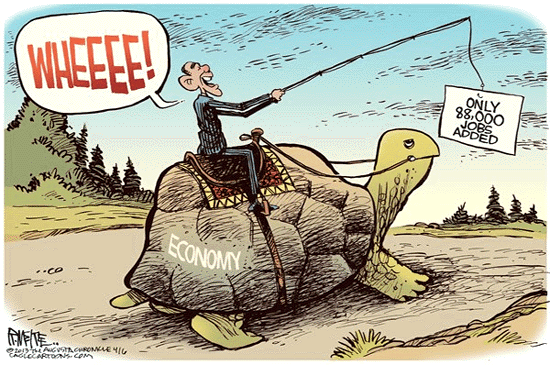
The weekly and monthly series don't match exactly but over a quarter they do - and that should give us a very good indication about the level of 'switching' going on in the mortgage market. The approvals far exceed the growth in overall lending. Basically, customers are churning their mortgages between banks chasing low rates and better deals in a market that is still showing low (but improving) growth..

4. Today's raw market data ...
A quick new week update:
| as at 11:10am |
Today 9:00 am |
Friday |
Four weeks ago |
One year ago |
| NZ$1 = US$ | 0.8433 | 0.8422 | 0.8211 | 0.8194 |
| NZ$1 = AU$ | 0.8120 | 0.8074 | 0.8038 | 0.7954 |
| TWI | 77.68 | 77.47 | 75.85 | 73.31 |
| Gold, US$/oz | 1,568 | 1,547 | 1,594 | 1,644 |
| Dow | 14,554 | 14,598 | 14,444 | 13,056 |
| Copper, US$/tonne | 7,376 | 7,336 | 7,677 | 8,366 |
| Volatility Index | 13.92 | 13.89 | 11.56 | 18.81 |
5. A bullsh*t index
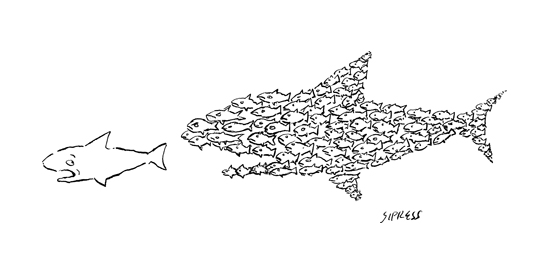
Do you write? Here is a way to measure the presence of terms that are perceived as deceiving, misleading, disingenuous or false. Perhaps we should all should check our entries here first. A 'Bla-bla-meter'. Interestingly, the meter was sceptical of both the Stiglitz and Rogoff extracts above - but fortunately it has been kind to my own paras in today's Top 10 (phew!). It cleared #7 below too - so I am sure some commenters will label the BS meter as BS itself. It's fun to use all the same.
5.a. Syndicating houses
Property syndication has been around a long time for 'blue chip' commercial properties - big-box retail, office towers and the like. Recently a few adventurous souls have taken to slicing-and-dicing suburban shop buildings. And now it looks like we are about to get syndicates based on residential housing. Anne Gibson at the NZ Herald has some early details.
It will be very interesting to see the yields that are promoted - unlikely to be at the level good quality commercial real estate offers. Hopefully they will not be throwing in anticipated capital gains to justify the projects.

6. This Greek hero slay monsters of the fiscal variety
Renewing Greek politics - even the attitudes of the Greek voters and taxpayers - will take bold new leadership. And perhaps green shoots are appearing. The new mayor of Thessaloniki, Greece's second largest city, is a chemist by training, a winemaker by profession. and a wildlife protector by instinct. He has started making some progress by appealing to Turkish and Israeli tourists who are arriving in big numbers. Meet Yiannis Boutaris:
He is a craggy-faced, chain-smoking septuagenarian, decorated in tattoos and gold jewellery, and was once a member of the local Communist party. He is also emerging from the clutter of his own life to become the potential saviour of Thessaloniki, Greece’s second-biggest city and one of the few with a balanced budget.
If he succeeds, Greece will be able to claim that at least one of its cities has bucked the economic spiral that has spread misery throughout the country since the debt crisis began in 2009.
The mayor became the city’s traveling salesman. He visited Istanbul, Ankara and Israeli cities to give speeches and invited travel journalists to Thessaloniki. Ataturk’s house and Ottoman buildings were restored.
“We welcomed Turks to come to their fatherland,” he says. “I get a lot of criticism for this. Nobody denies the killings [in the Greco-Turkish wars]. But we cannot live with hatred. We have to live together.”
Last year, 50,000 Turks and a similar number of Israelis visited the city, up from almost none in 2009.
7. Game changer (#9856?)
For those of you who missed our readers link, here it is again. It is claimed to be an important step in making the transition to hydrogen as an energy source. HT Square. But it is not clear yet how much energy it requires to get the reaction to work, a crucial element.
A team of Virginia Tech researchers has discovered a way to extract large quantities of hydrogen from any plant, a breakthrough that has the potential to bring a low-cost, environmentally friendly fuel source to the world.
“Our new process could help end our dependence on fossil fuels,” said Y.H. Percival Zhang, an associate professor of biological systems engineering in the College of Agriculture and Life Sciences and the College of Engineering. “Hydrogen is one of the most important biofuels of the future.”
Zhang and his team have succeeded in using xylose, the most abundant simple plant sugar, to produce a large quantity of hydrogen that previously was attainable only in theory. Zhang’s method can be performed using any source of biomass.
8. How we compare
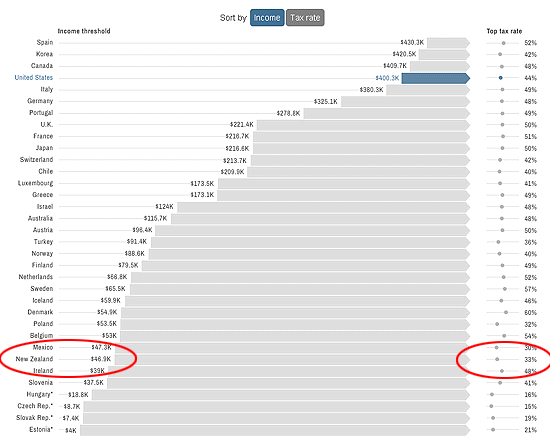
New Zealand might have one of the lowest top income tax rates in the OECD (#7 of 34) but it kicks in at one of the lowest levels (also #7). Click on the chart to go to the original interactive CNNMoney table.
9. Job losses
Very few job losses reported this week. The loop of recycling job loss stories continues with very little new. And most of the bigger ones are 'losses' that will be handled by attrition and reassignment, rather than actual layoffs or redundancy.
We are keeping a tally of reported job losses and we are asking readers for help keeping track of them. Let us know when you see some.
10. Today's quote
"Money will buy you a fine dog, but only love can make it wag its tail." Richard Friedman
Government debt
Select chart tabs
7 Comments
The graph in #8 would benefit hugely from some kind of measure of how much people earning in each country, for example (since it is discussing the top tax rate) a bar line for the threshold of where the top 10% of income earners in the country falls. At the moment it is making a inter country comparison without reference to the starting position or each country.
#5a "Hopefully they will not be throwing in anticipated capital gains". It would indeed be nice if projects resisted such financial heroin, but I can't imagine such a world in practise, in much the same way "It would be nice if people didn't try using dodgy offshore tax havens".
Since I said a median population figure would be useful I have added it in on the basis of what is easy to find, giving the graph at http://www.flickr.com/photos/thoughtfulbloke/8631009568 This is the graph from http://money.cnn.com/interactive/pf/taxes/top-income-tax-rate/?iid=EL That I felt needed a median adult income figure, for which I (manually, so slightly approximately) added median wealth per adult for 2011 from https://infocus.credit-suisse.com/data/_product_documents/_shop/323525/2011_global_wealth_report.pdf I would observe that Australia and (to a lesser extent) New Zealand seem to be very unusual in having the red bar median to the right of the level at which the top tax rate kicks in, suggesting these counties have quite regressive taxation systems (as the rich [before tax avoidance] are not paying more of their income than the middle class).
5a: "Hopefully they will not be throwing in anticipated capital gains to justify the projects."
I think it would be fair to anticipate a 'capital gain' at the rate of inflation, so 1-2% P/A. Of course with the housing shortages we currently have that may be a very low anticipation...
on #5 ...I got a( .19) on my last post Today's 90 at 9 Bernard.....I thought I'd have scored higher, I'm just not cut out for politics it seems....how did you do...?
'll flick you a similar link for fun if I can find it in my Favs .
Oh good here you go....http://www.billcook.net/cool_test.html
#2. Myself and PDK have given you the answer to why interest rates are low Bernard. Firstly interest is a method for the redistribution of wealth and from PDK it is clear the wealth has run out. We are now in the cannibilisation phase. On top of that as the interest component forms a greater percentage of the money supply it can only but go down.
#7
"This results in an energy efficiency of more than 100 percent — a net energy gain. That means that low-temperature waste heat can be used to produce high-quality chemical energy hydrogen for the first time. Other processes that convert sugar into biofuels such as ethanol and butanol always have energy efficiencies of less than 100 percent, resulting in an energy penalty."
So to convert that into EROEI.
Ethanol has had a EROEI of 1:1 maybe 0.8:1 or maybe 1.2:1 depending on who makes the claims. This process claims to be 100%+ or > 1:1 or say 1.2:1?, or 1.5:1? (150%) its still not 8:1 or 800% which is what our modern economy needs.
Tar sands is about 5:1 or 500%, even that doesnt work, so a long way to go, check the maths chaps, energy in = energy out...
So it looks like another failure, yet another rob peter to pay paul product.
regards
Quite correct, Steven.
I went to a lecture a couple of years ago, from a gog in an Otago Uni wheel, disseminating photosynthesis DNA. Great stuff, probably needed in to long run - given that no stone should be unturned - but not a supporter of BAU.
Not sure if DC puts these wee bits in to stir, or from belief, need to.
Looking forward to the time when all scribes understand it.
We welcome your comments below. If you are not already registered, please register to comment
Remember we welcome robust, respectful and insightful debate. We don't welcome abusive or defamatory comments and will de-register those repeatedly making such comments. Our current comment policy is here.