
By Bernard Hickey
Treasury Secretary John Whitehead has warned in a wide-ranging speech that New Zealand's economic growth has been the slowest in the OECD since the 1950s and it faces an exodus of 410,000 New Zealanders in the next 15 years if we don't improve our growth rate and reduce our indebtedness.
Whitehead told a Russell McVeagh luncheon in Auckland that Standard and Poor's decision to put a negative outlook on New Zealand's credit rating highlighted how financial markets wanted to see an improvement in the nation's debt levels.
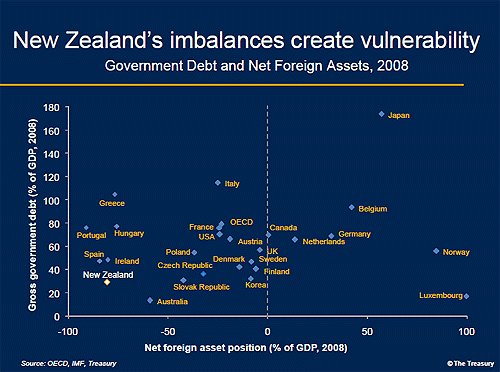
He referred to a chart showing New Zealand's level of net foreign debt being similar to those of Portugal, Ireland, Greece and Spain, although much of that debt is private debt owed by banks rather than the government.
"As this chart shows, our net foreign debt position, as a country, is one of the largest in the developed world, at nearly 90 per cent of GDP at last count. And the company we are keeping in this respect may ring some alarm bells," Whitehead said.
"Many countries with similar levels of external indebtedness to us are now experiencing severe fiscal and economic stress," he said.
"While New Zealand’s low starting level of government debt appears to be an important differentiating feature, our government debt is rising. This trend, and the vulnerability to another external shock associated with our high national level of indebtedness, suggests that action is warranted."
New Zealand's average economic growth rate of 1.3% since the 1950s was the lowest in the OECD, he said.
"In 1950 we had the third-highest GDP per capita ranking among OECD countries. Last year we were ranked 22. Tumbling down a league table tells us that our competitors are doing things smarter and better. Imagine the outcry if a sports team suffered such a decline?," Whitehead asked.
New Zealand would need to crank up average growth to 4% over the next 15 years to catch Australia, he said.
"That’s more than double New Zealand’s average rate since 1992 and more than triple the average rate since 1950. But this is the kind of target that I think New Zealand needs to be aiming for."
Increased private sector saving and a reduced budget deficit would reduce New Zealand's vulnerability, Whitehead said.
He also pointed to a chart showing how rental investment was taxed at a much lower real effective rate than investment in term deposits and bonds, local shares or foreign shares.

"This warrants additional examination, and so too do the high rates of effective tax for savings over time due to the taxation of accumulated income from savings, which is accentuated by the effects of inflation," he said.
Lower corporate tax rate? Capital Gains Tax?
Whitehead said more needed to be done to compete internationally for capital and labour to boost New Zealand's growth rate than just the GST/Income tax switch announced in this year's May budget. He pointed to New Zealand's corporate tax rate being above the OECD average.
He also said Treasury had recommended a Capital Gains Tax in the past.
New Zealand also needed to improve its regulatory environment. He referred specifically to the Resource Management Act and the Hazardous Substances and New Organisms Act (HSNO) from 1997, which had been crucial because of the implications for primary sector productivity.
"The HSNO legislation is crucial because of the implications for innovation and primary sector productivity. The number of genetically modified organism trials and outdoor developments spiked significantly just before HSNO came into effect, and has diminished following its introduction," he said.
"These trials and outdoor developments are critical for innovation in biotechnology, a rapidly developing field where New Zealand has significant expertise. However our regulations under HSNO are more restrictive than a number of other countries. And it may be time now to review the Act to test whether or not it is striking an appropriate balance between economic opportunities and protection of the environment and public health."
.
We welcome your comments below. If you are not already registered, please register to comment
Remember we welcome robust, respectful and insightful debate. We don't welcome abusive or defamatory comments and will de-register those repeatedly making such comments. Our current comment policy is here.