
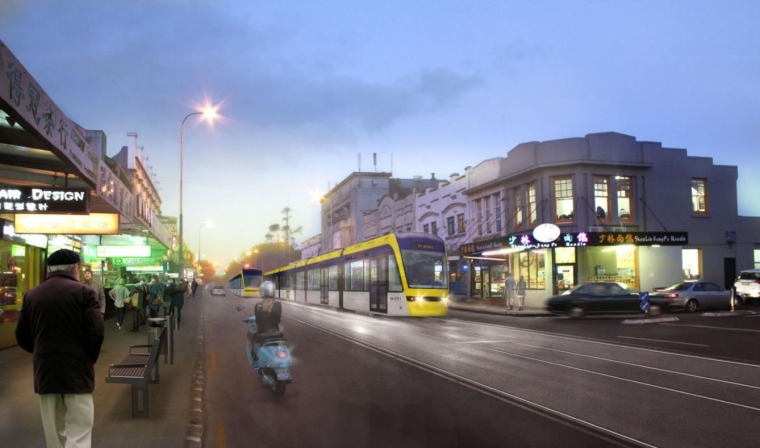
Transport Minister Phil Twyford has revealed the Ministry of Transport recommended NZ Infra build the Auckland light rail, not the New Zealand Transport Agency (NZTA).
Twyford confirmed this on Wednesday, after he announced the project was officially on the rocks, as New Zealand First wouldn’t support it.
New Zealand First has been voicing its disapproval of light rail increasing loudly in recent weeks, citing cost as a factor as well as its preference for heavy rail.
After taking the matter to Cabinet on Monday, Twyford on Wednesday confirmed it was a project that would have to be re-looked at after the election.
NZ Infra is a joint venture of the NZ Super Fund and CDPQ Infra - an infrastructure subsidiary of the Canadian pension fund, Caisse de dépôt et placement du Québec. It made an unsolicited bid in 2018 to lead the light rail project.
Twyford said: “The Ministry of Transport and the Treasury will report back after the general election on the best option for this project to be delivered by the public sector.
“The Ministry of Transport and the Treasury will also engage with NZ Infra and Waka Kotahi about how work done on this project can support the next phase.”
Unknown whether NZ Infra is still interested
NZ Infra said it was “disappointed”, but didn’t indicate whether it remained interested in being involved in the project, if in fact this could be done while it was "delivered by the public sector".
NZ Super Fund CEO Matt Winerary said: “We remain committed to seeking opportunities for the NZ Super Fund to invest in New Zealand, including in large-scale infrastructure, and look forward to utilising the knowledge and expertise we have developed on other projects.”
While Twyford originally touted the project as one aimed at enabling urban development, he on Wednesday said his thinking was to prioritise rapid transit.
He couldn't say what the price tag on the NZ Infra proposal was. There have been numerous media reports in recent years suggesting it was a much grander proposal than NZTA's.
Twyford said light rail would remain a project in the Auckland Transport Alignment Project.
Greens want the public service to run the project
While work on Auckland light rail was part of the confidence and supply agreement between Labour and the Greens, the Greens said it "welcomed" the decision not proceed with the ‘public public investment’ model, as the party favoured the process being run through the public service.
In making this comment, the Greens inadvertently expressed its disproval of the NZ Infra bid.
Its transport spokesperson Julie Anne Genter said: “With the twin track process over, detailed planning work on light rail can continue and key design and financing decisions can be taken quickly after the election.
“This decision means Aucklanders will have a greater say in what the project ultimately looks like. It’s really important that those living there contribute to the final design – and now they will have that chance.
“Auckland Transport and the Auckland Council need to be at the table to contribute to final decisions about alignment, stations and how the Mangere line will integrate with the rest of Auckland’s future rapid transit network – including a light rail connection to West Auckland and the Shore."
Concern this makes NZ look like an unattractive place to invest
Infrastructure NZ CEO Paul Blair said: “A risk emerges that international infrastructure expertise views New Zealand as unattractive and expensive, an issue which could undermine the country’s COVID recovery.
“It will now be very important for government to learn from the process, including how best to managed unsolicited bids, engage the sector on complex projects and manage intellectual property concerns."
National leader Todd Muller said: “This Government talks big, but delivers little. Light rail will now join KiwiBuild as the prime examples of its epic failure to deliver on its promises to voters.
“Auckland light rail was Jacinda Ardern’s first campaign promise as Labour leader in 2017 and was meant to be up and running between the CBD to Mt Roskill by 2021. But nearly three years on, the project has gone backwards."
Here’s a statement from Twyford:
Cabinet has agreed to end the twin track Auckland Light Rail process and refer the project to the Ministry of Transport for further work, Transport Minister Phil Twyford says.
Despite extensive cross-party consultation, Government parties were unable to reach agreement on a preferred proposal. The future of the project will now be decided by the government following September’s general election.
Phil Twyford says two credible and deliverable proposals were received.
“I’d like to thank NZ Infra and Waka Kotahi NZ Transport Agency for their work and innovative proposals.
“Either would have created hundreds of jobs and resulted in an Auckland metro that offered Aucklanders a 30 minute trip from the CBD to the Airport.”
Auckland Light Rail remains a project in the Auckland Transport Alignment Project (ATAP), he said.
“The Ministry of Transport and the Treasury will report back after the general election on the best option for this project to be delivered by the public sector. The Ministry of Transport and the Treasury will also engage with NZ Infra and Waka Kotahi about how work done on this project can support the next phase.
“The Government remains committed to fixing congestion in Auckland and boosting jobs through building infrastructure. We’ve made good progress on ATAP with construction starting this term on the Eastern Busway, Matakana Link Road, SH20B upgrades, the Puhinui Interchange, Karangahape Road Cycleway, and the Constellation Bus Station upgrade, to name a few.
“Auckland Light Rail will be New Zealand’s most complex infrastructure project in decades and it’s vital we get it right for future generations,” Phil Twyford said.
Notes to editors:
- Work on the Auckland Light Rail was part of the confidence and supply agreement between Labour and the Greens. This work continues with the Ministry of Transport.
- The Ministry of Transport and the Treasury will work with both Auckland Council and Auckland Transport, as well as other agencies including the Ministry of Housing and Urban Development to prepare options for the new government to consider.
- They will also address the policy and system changes needed to help build rapid transit projects of this scale in our largest cities.
We welcome your comments below. If you are not already registered, please register to comment
Remember we welcome robust, respectful and insightful debate. We don't welcome abusive or defamatory comments and will de-register those repeatedly making such comments. Our current comment policy is here.