

Westpac New Zealand says retail spending rallied in July, helped by a dip in fuel prices and a boost in hospitality spending thanks to the FIFA World Cup.
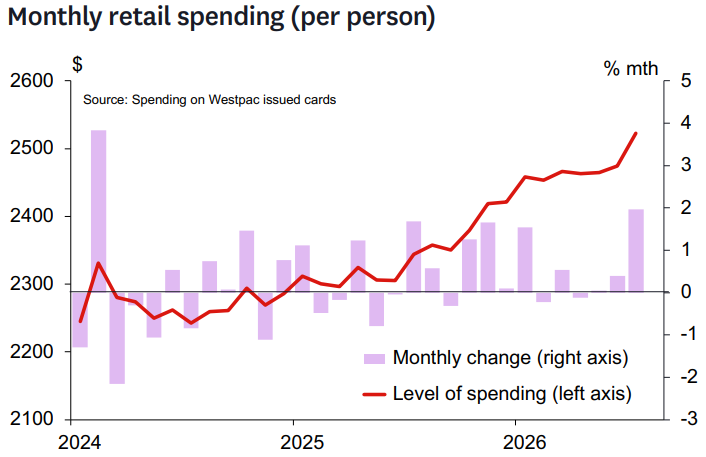
In Westpac’s latest Retail Spending Pulse bulletin, per-person spending on Westpac-issued credit and debit cards ticked up 2% in July, after previously “trending sideways” for most of this year.
July saw a nearly 3% increase in spending on groceries and a 2% lift in utility spending.
Senior economist Satish Ranchhod says the increase in utility spending was partly related to the “large increases” in electricity prices over the past year.
“Even when it comes to spending on essentials like groceries, around 30% of those we spoke to said they’ve changed how they shop, purchasing fewer or cheaper items,” Ranchhod says.
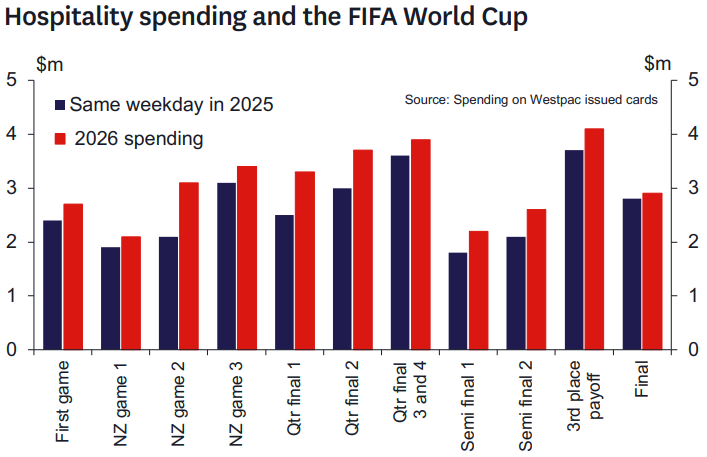
A fall in fuel prices helped nudge up retail spending during the month but the FIFA World Cup also gave retail spending a boost in July. Ranchhod says hospitality spending rose on days when major football matches were played, compared to the same time last year.
Spending in restaurants was up 5% in July, while spending on other entertainment rose 2%.
July also saw increases in sports betting, as well as increased purchases of Lotto tickets in response to the large $40 million Powerball jackpot last month, which was split by two winning ticket-holders. Ranchod confirmed he hadn't won the Powerball, due to the fact he is still writing reports for Westpac.
Fuel prices continue to wallop wallets
The pain at the fuel pump continues for households, with Ranchhod noting that high fuel prices have “sucked a large amount of cash out of many households’ wallets,” which is changing people’s spending habits.
“While fuel prices have fallen from their earlier highs, they remain well above the levels that we saw prior to the war in the Middle East. At the time of writing, 91-unleaded was averaging $3.05/ltr around the country, compared to around $2.44/ltr back in February,” Ranchod says.
Because of higher fuel prices, 36% of the households Westpac spoke to for the latest retail survey told the bank they had wound back their discretionary spending, with around 15% of respondents having delayed or cancelled travel plans. Almost half of respondents – 44% – are driving less often.
The latest Selected Price Indexes (SPI) figures from Statistics NZ will be released next week, which will give an insight into fuel prices during July. The SPI is a monthly series that features about 47% of the contributors to the quarterly Consumers Price Index (CPI), the official measure of inflation in NZ.
The June SPI found that from May to June, petrol prices were down 4.2% while diesel prices decreased 12.1%. However, in the 12 months to June 2026, petrol prices were up 23.6% and diesel prices were up 57.1%.
“With continued cost of living pressures, a soft labour market and ongoing economic uncertainty, we expect spending levels are likely to rise only gradually through the back part of the year,” Ranchod says.
New Zealand’s jobless rate rose to 5.6% from 5.4% in the June quarter, the highest it has been since 2014. The latest unemployment figure was well above projections made by the Reserve Bank (RBNZ) and bank economists.
Commodities boost
Retail spending growth in Auckland and Wellington is continuing to trail the rest of the country, while other regions have bounced ahead.
Ranchod says there have been particularly large increases in retail spending in regions with large dairying sectors – like Southland, Otago and Canterbury – and strong prices for NZ’s commodity exports have continued to boost earnings, confidence and spending in many regional centres.
“We’ve also seen strength in the prices for key horticultural exports (like apples and kiwifruit), which is helping to boost spending in regions like Bay of Plenty,” he says.
On a seasonally-adjusted level, retail spending growth by region on a monthly basis was the lowest in Gisborne/Hawkes Bay and Northland.
Gisborne/Hawkes Bay spending rose 1% in July compared to June and Northland spending edged up 1.5% in the same period. However, Auckland and Wellington weren’t far behind, with spending in those areas up just 1.6% and 1.7% in July on a monthly basis.
Retail spending performed the best in Southland during July, up 3.8%. Otago was close behind, up 2.9%.
On an annual basis, retail spending was still highest in Southland, rising 11.3%, and in Northland, up 9.5% compared to July 2025. It was lowest in Wellington, where retail spending rose 6.7% annually.
Auckland and Waikato were close behind, with retail spending up 7.2% compared to the same period a year ago.
We welcome your comments below. If you are not already registered, please register to comment
Remember we welcome robust, respectful and insightful debate. We don't welcome abusive or defamatory comments and will de-register those repeatedly making such comments. Our current comment policy is here.