
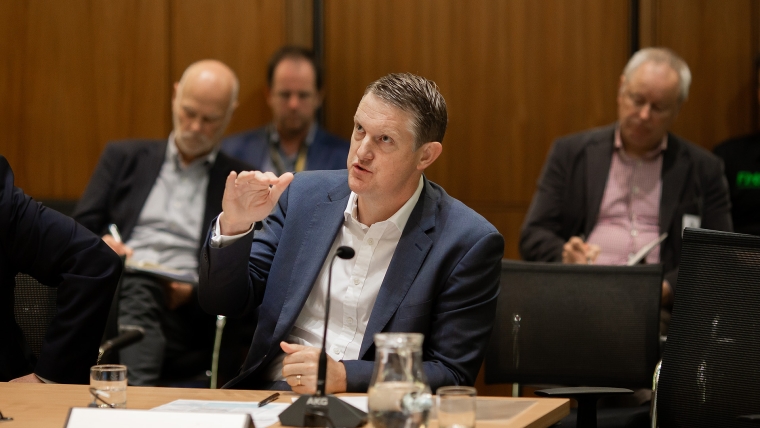
BNZ wants to wind up all outstanding loans to petrol stations over the next six years to reduce or eliminate exposure to fossil fuel risk, CEO Dan Huggins told MPs.
Stuart Smith, Chairman of the Finance and Expenditure Committee (FEC), asked Huggins and BNZ Chairman Warwick Hunt about a Federated Farmers press release, which alleged the bank had a policy against new lending to petrol stations and were requiring existing debt to be paid off by 2030.
Huggins said this was correct but it was because of the credit risk petrol stations could pose in the future, rather than being motivated by climate targets or policies.
“We’ve looked at our exposure to petrol stations and then we’ve looked at the long term future of those businesses, recognising that we expect conversion to electric vehicles to change demand for fuel services”.
“Therefore, from a credit perspective, we’ve said, look, we have enough exposure in that space and don’t want to increase that exposure”.
However, Huggins couldn’t (or wouldn’t) say how big BNZ's lending to petrol stations is currently, and admitted they weren’t just limiting exposure but phasing it out completely.
Smith said he had seen an internal document which said all debt should be amortised by 2030 or thereabouts, which also included a hyper-link to the Net Zero Banking Alliance (NZBA).
Climate 'cartel'
NZBA is a United Nations group, founded in 2021, which helps banks to align their lending and other business activities to match net-zero emissions goals set by governments in 2015.
Goldman Sachs quit the alliance earlier this week, saying it had the capability to achieve its net zero 2050 goal and interim targets without support from the UN group.
BNZ’s Chief Sustainability Officer, Rebekah Cain, appeared on interest.co.nz's Of Interest podcast in August last year to discuss the bank and NZBA’s work on reducing emissions financing.
Smith must be a listener, because he quoted that interview to Huggins several times during the FEC hearing on Wednesday morning.
Finance was a “key lever to pull in order to shift the real economy” because if “something is funded it happens, and if it isn’t funded it doesn’t,” Cain said in the interview.
The FEC Chairman questioned whether it was appropriate for unelected banks to be setting and enforcing climate policies in New Zealand. Federated Farmers has complained to the Commerce Commission that coordinating through NZBA could be cartel-like behaviour.
Huggins said the bank had an obligation to help customers meet climate goals, which have been set by elected governments, and also to write secure loans which will be paid back.
Market forces
Chloe Swarbrick, co-leader of Green Party and a committee member, said the National and Act party members were essentially arguing against free market capitalism.
BNZ’s decision not to lend to fossil fuel businesses was a commercial decision made by a private company in response to the realities of climate change and existing emissions reduction policies.
The Government’s own emissions reduction plan, released on Wednesday morning, set a target of having a network of 10,000 public electric vehicle charging stations by 2030.
New Zealand will likely have two million EVs on the road by the mid 2030s and will stop registering new combustion engine cars, although heavy vehicles may still require fuel.
Petrol stations will face a difficult transition during the next two decades and many may have to shut up shop as demand for fuel falls. BNZ simply doesn’t want to take on this risk.
'Cartel-buddies'
But Ryan Hamilton, a National Party MP, said it was much too soon to be “defunding” petrol stations when only 2% of the country’s vehicle fleet were electric today.
“What do you say to mum and dad investors in petrol stations, who have invested their life savings for a means of income? You are saying you're defunding them with your cartel-buddies,” he said.
Stuart Smith ended the hearing with another hint of possible action the Government could take against the banks, referencing legal action taken by Republican states in the US against investment firms BlackRock, Vanguard, and State Street over their climate policies.
The lawsuit, filed in November, argued the three big investment firms colluded to pressure coal companies to reduce output and drive up electricity prices. It cites the firm's involvement in the Net Zero Asset Managers Initiative, which is similar to the NZBA mentioned above.
In a statement, Federated Farmers said there was no problem with individual companies setting emission reduction targets but it was concerned banks were coordinating in an anti-competitive way.
"For the avoidance of doubt, Federated Farmers are not definitively saying that banks are operating in an anti-competitive, cartel-like way that falls foul of the law. What we are saying is that it sure does look like they are, and we need the Commerce Commission to urgently investigate to give us some answers”.
We welcome your comments below. If you are not already registered, please register to comment
Remember we welcome robust, respectful and insightful debate. We don't welcome abusive or defamatory comments and will de-register those repeatedly making such comments. Our current comment policy is here.